google

Skip to main content

Tag: google

EmbeddingGemma 2: Open 740M-Parameter Multimodal Embedder Under Apache 2.0, With Up to 6x Storage Reduction

EmbeddingGemma 2: Open 740M-Parameter Multimodal Embedder Under Apache 2.0, With Up to 6x Storage Reduction

EmbeddingGemma 2 extends Google's lightweight embedding model beyond text, placing code, images, video, and audio in one shared embedding space. The original EmbeddingGemma has passed 20 million downloads, and the new version is built on the Gemma 4 architecture with 740 million parameters. For developers building on-device search and privacy-first retrieval augmented generation (RAG) pipelines, that means one small model can handle cross-modal retrieval, such as finding a video clip from a voice memo, without sending data to a server. Key Features at a Glance — Google Shared multimodal...

Continue reading

Playground: Create and play your own custom games

Playground: Create and play your own custom games

Playground is an experimental gaming platform that lets you create, play, and share custom games. You describe a game in text prompts, with no coding experience required. It launches today for U.S. users aged 18 and older at playground.google. For anyone who has wanted to make a game but lacked engine experience, this removes the technical barrier. You can test each idea right away and keep changing it by asking for different physics, rules, characters, or environments. Key Features at a Glance Conversational creation: Type what you want to build, or start from a blank canvas or a remixed...

Continue reading

ML-Intern: Six AI Models Built From a Single Prompt

ML-Intern: Six AI Models Built From a Single Prompt

Last week, I wanted a small version of the prompt rewriter that ships with Qwen-Image 2.1. The official one is a 9B model that needs about 20 GB of memory and thinks for thousands of tokens before writing a single paragraph. The Hub had only compressed copies of that same 9B model. So I described what I wanted to ML-Intern, and the next day I had a 0.8B version that runs on a CPU. It returns valid output 99.7% of the time and uses about a quarter of the teacher's tokens. The compute for the whole project, including having the 9B model label 8,797 example requests, came to USD 16. Over the...

Continue reading

A man in a black jacket and cap sits at a white desk, typing on a keyboard with music equipment nearby.

Producers can now code their own music production tools using Google Flow Music

Every artist, producer, and songwriter works differently. To match those individual creative workflows, Spaces in Google Flow Music lets creators build custom instruments or effects using natural language — no coding experience required. Producers can now export their custom Spaces as VST3/AU plugins to run inside their Digital Audio Workstations (DAWs), bringing these capabilities directly into professional production setups. This allows producers to build tools tailored to their processes and styles within their familiar workflows. Producer Khris Riddick-Tynes created a plugin called...

Continue reading

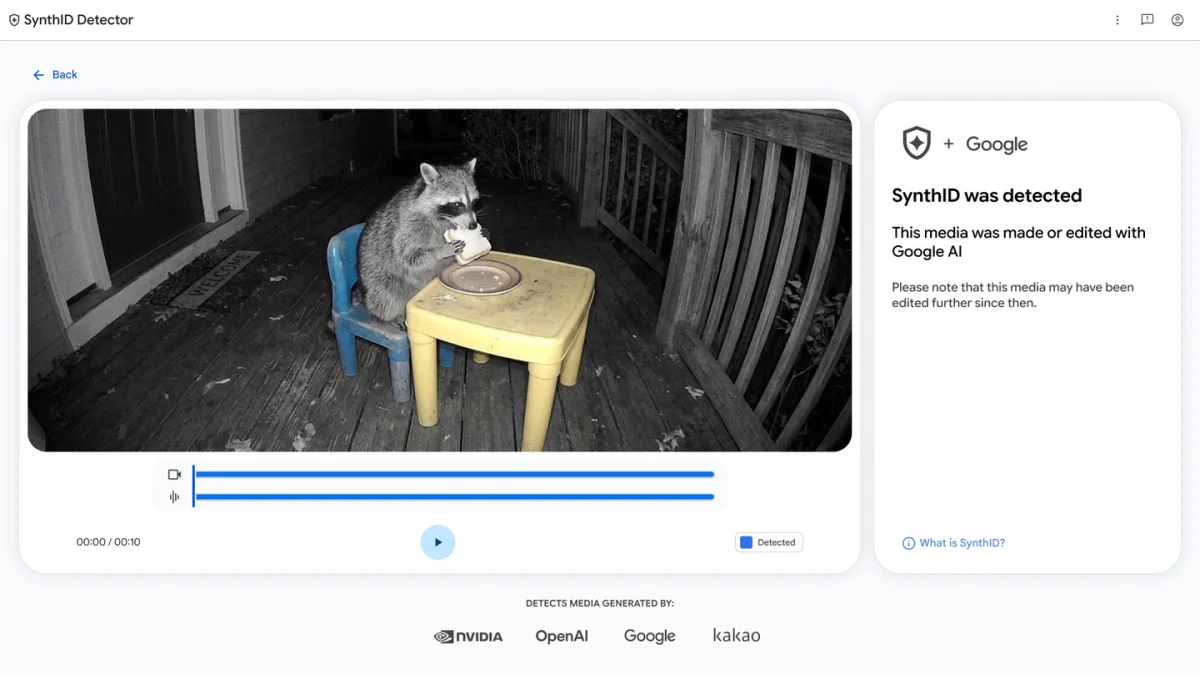
A raccoon sits at a small table on a porch, eating from a plate, detected as AI-generated by Google’s SynthID tool.

Google expands SynthID Detector to help identify AI-generated content globally

As AI tools become better and easier to use, having clear context about the content you encounter online helps you make informed decisions about what to trust. Since launching Google SynthID in 2023, we've helped people identify AI-generated media using imperceptible watermarks across images, video, and audio. To date, we've watermarked over 180 billion images and videos, along with 240,000 years of audio content. Last year, we introduced an early version of the SynthID Detector to help media professionals verify AI-generated content. Now, we're expanding access globally with the tool...

Continue reading

A blue gradient card displays "Gemini 4 Argon" with a large white number 4 and Google’s multicolored logo.

From Orbit to DNA: Inside Google’s Next Era of Frontier AI

For more than 20 years, Google has invested in machine learning and AI research, tools, and infrastructure to build products that improve everyday life. Teams across the company are working on ways to unlock AI's benefits in fields ranging from healthcare and crisis response to education. Here's a look at some of the company's AI announcements from September. The big picture September's headline belongs to Gemini 4 Argon, Google's newest frontier model. Built with advanced reasoning and a 1-million-token context window, it's designed to tackle complex challenges—especially in cybersecurity...

Continue reading

A large white number "4" glows against a blue gradient background with "Gemini 4 Argon" text and Google's multicolored star logo.

Gemini 4 Argon: Google’s Next Frontier Model

Google announced Gemini 4 Argon, a new frontier model rolling out to trusted cybersecurity defenders through its Fairwind Program. Built to handle deep reasoning across complex, long-horizon workflows, Argon delivers frontier performance in software engineering, enterprise knowledge work like legal and finance, and cybersecurity defense. The company is taking a phased approach to safely release capabilities at this level, actively engaging with the U.S. government's voluntary pre-release model access process while gradually expanding access. Argon will launch at an introductory price of $2...

Continue reading

Google Cloud logo above text "Startups open up to Gemma" beside a flowing, translucent abstract sculpture in warm hues.

Building Smarter AI Stacks: Why Startups Are Ditching One-Size-Fits-All Models

Every week, I talk with founders building at an unbelievable pace. Teams are moving from inception to product-market fit faster than ever, with foundation models wired deeply into their core product workflows. Yet as startup architectures mature, a clear divide has emerged between teams struggling with margins and those scaling sustainably. The most effective engineering teams have abandoned the one-size-fits-all model strategy. In the early days of LLMs, the default architecture was simple: send every interaction to the largest model available. But as applications move into production,...

Continue reading

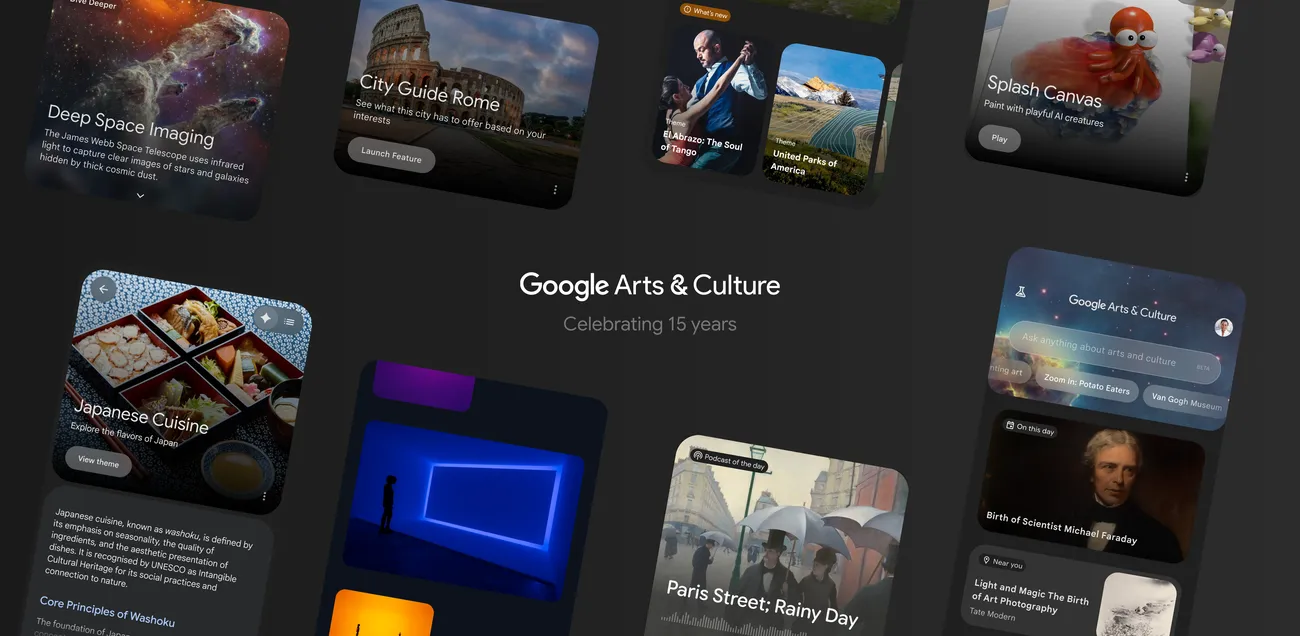
A collage of smartphone screens showcasing Google Arts & Culture app features like City Guide, Splash Canvas, and art exhibits.

Google Arts & Culture turns 15 — free to download

Google Arts & Culture is marking its 15-year milestone with a redesigned mobile app. Over the past decade and a half, the platform has partnered with more than 3,000 cultural institutions and artists across more than 90 countries, aiming to preserve and make the world's art and culture accessible to everyone. The updated experience helps users navigate partner archives, including high-resolution artworks, archaeological 3D artifacts, fashion, performance art, sports, craft, culinary heritage, natural history, science, design, and nature. A new conversational search At the heart of the...

Continue reading