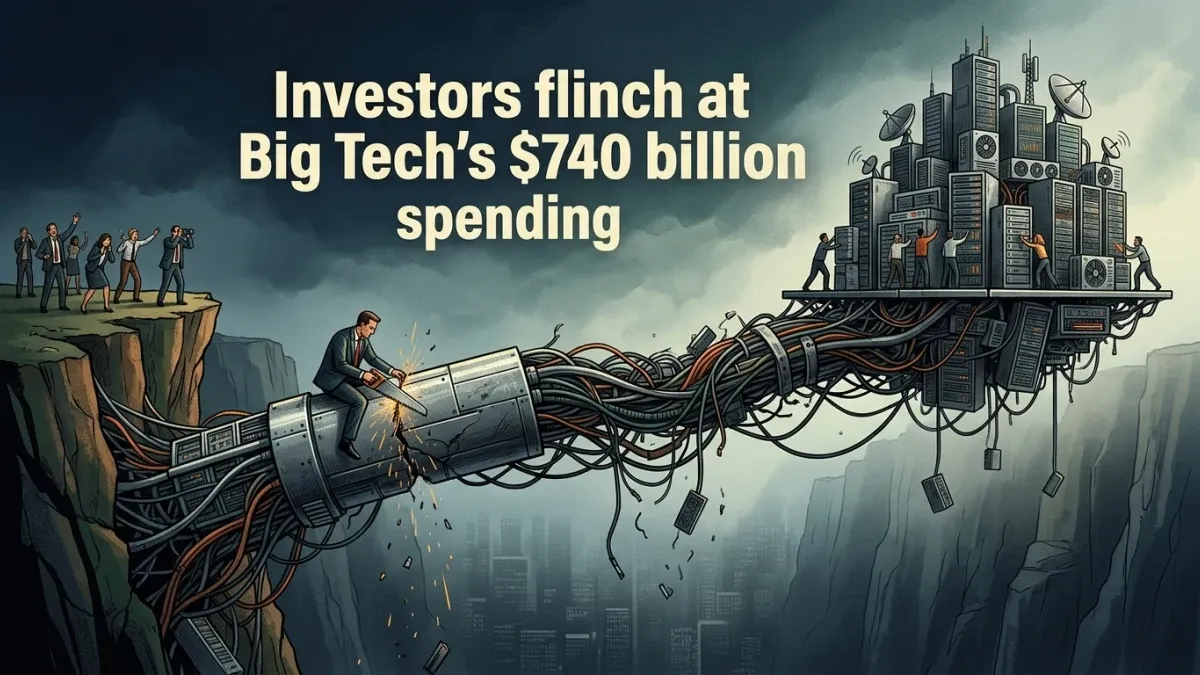
Investors are getting nervous about AI infrastructure spending just as the Big Tech companies double down. Over the past two weeks, Alphabet, Amazon, Meta, and Microsoft have outlined plans to spend more than $740 billion on capital expenditures this year, which Wall Street is reading as AI infrastructure spending, including data centers and chips. Only Microsoft escaped the free cash flow squeeze.
Key Results at a Glance
Market reaction: The Nasdaq fell 2.9% on Friday. Nvidia dropped 4%, Broadcom more than 5%, and Qualcomm 11%.
Alphabet: Its stock plummeted 12% on Thursday, its worst day...
Google is bringing ads in AI Mode to new countries. Because AI Mode queries are, on average, three times longer than traditional searches, Google says AI helps it match people with the businesses and services that best fit their needs. Its research shows people are comfortable with ads in AI Mode and find them highly relevant, and click-through rates are already similar between sponsored and organic product list items in AI Mode.
Google is scaling ads in AI Mode in Australia, Canada, India, Kenya, Malaysia, New Zealand, Nigeria, Pakistan, the Philippines, and Singapore. Additional...
Filling out online forms often means switching tabs or searching your inbox for an order number or flight booking. Chrome's autofill has long handled basics like your name, address, and credit card number. Its enhanced version now goes further by suggesting information pulled directly from Gmail as you fill out forms.
The feature is powered by Gemini with Personal Intelligence. It can surface details such as order numbers, tracking information, and flight bookings at the moment you need them. Google says it will soon extend these capabilities so enhanced autofill can securely access...
The Gemini app now has a library of immersive explorations, an interactive, visual way to explore topics one layer at a time, from microscopic systems to deep space and more.
Each scene is built around a subject such as tracing trade routes on the Silk Road, looking inside a jet engine, or studying the physics of lightning. Tapping a label digs deeper, moving from sweeping planetary scales down to molecules and atoms. Audio narration that walks you through each layer is coming soon.
Key Features at a Glance
— Google
Layer-by-layer exploration: Scales from planetary views down to molecules...
Google's Universal Cart, which it previewed earlier this year, is an intelligent shopping cart and a new hub for shopping on Google. Google describes it as part of its practical, “second track” of commerce work, which focuses on tools that give shoppers confidence and control, as opposed to agentic capabilities that act on a user's behalf. The cart is meant to mirror how people shop across Google without losing track of their items, their savings, or the merchants they trust. It helps organize shopping, keeps track of items saved from across retailers, surfaces promos, and...
Google Quantum AI has shown that “magic state cultivation” works in practice on its Willow processor, reducing errors about 40 times compared with running without it. The work, published in Science, addresses one of the field's most persistent bottlenecks and is, in the company's words, “a crucial step towards scaling up quantum computing to practical use.”
The “magic state” bottleneck
Researchers have anticipated this problem since 2004, long before quantum computing was a practical engineering pursuit. To achieve “universal” quantum...
Agentic AI systems are evolving beyond simple question-and-answer interactions. Modern AI agents can execute code, process files, query databases, interact with application programming interfaces (APIs) and perform multistep workflows on behalf of users. While these capabilities unlock new levels of automation, they also introduce new infrastructure and security requirements. Executing agent-generated code directly on a host system can expose organizations to software bugs, prompt-injection attacks, data leakage and privilege-escalation risks.
To address these challenges, agentic AI...
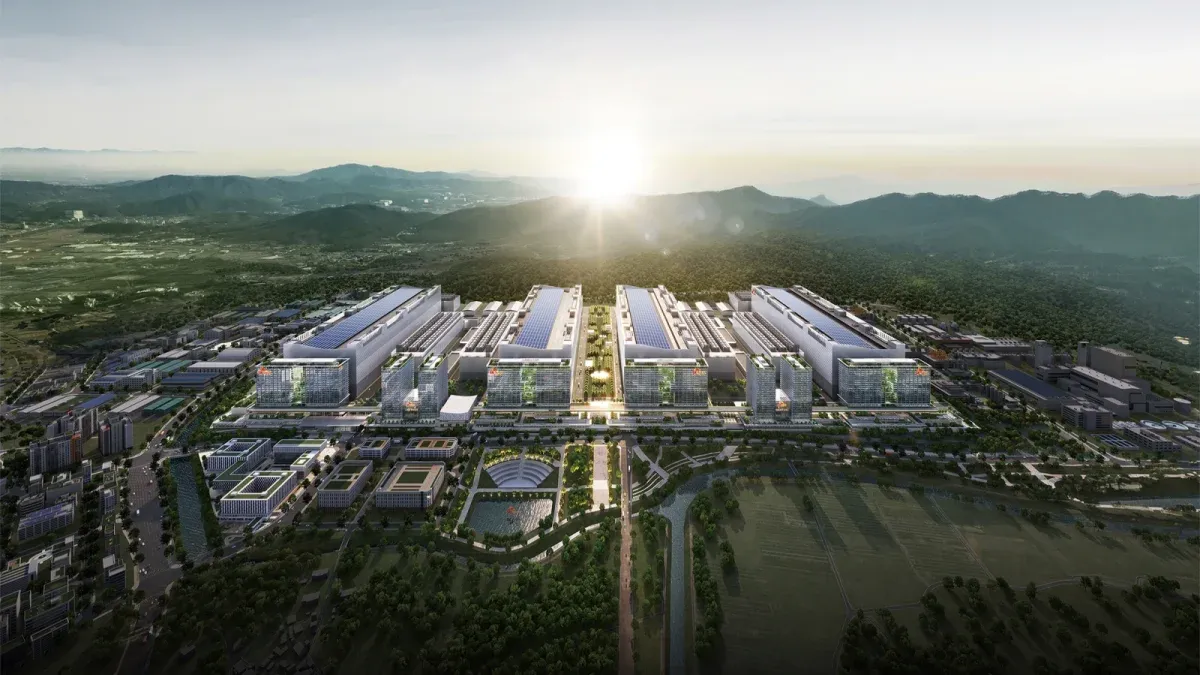
SK hynix Inc. announced that it has approved a total investment of approximately 54 trillion won to build new fabs in Yongin and Cheongju to meet growing demand for memory in the AI era. The company will invest 35.2 trillion won in the Yongin “Y2” fab and 19.1 trillion won in the Cheongju “M17” fab, according to a board decision.
Facility
Investment
Yongin Y2 fab
35.2 trillion won
Cheongju M17 fab
19.1 trillion won
Total
54 trillion won
This investment executes the mid-to-long-term strategy the company announced last June. SK hynix is currently...
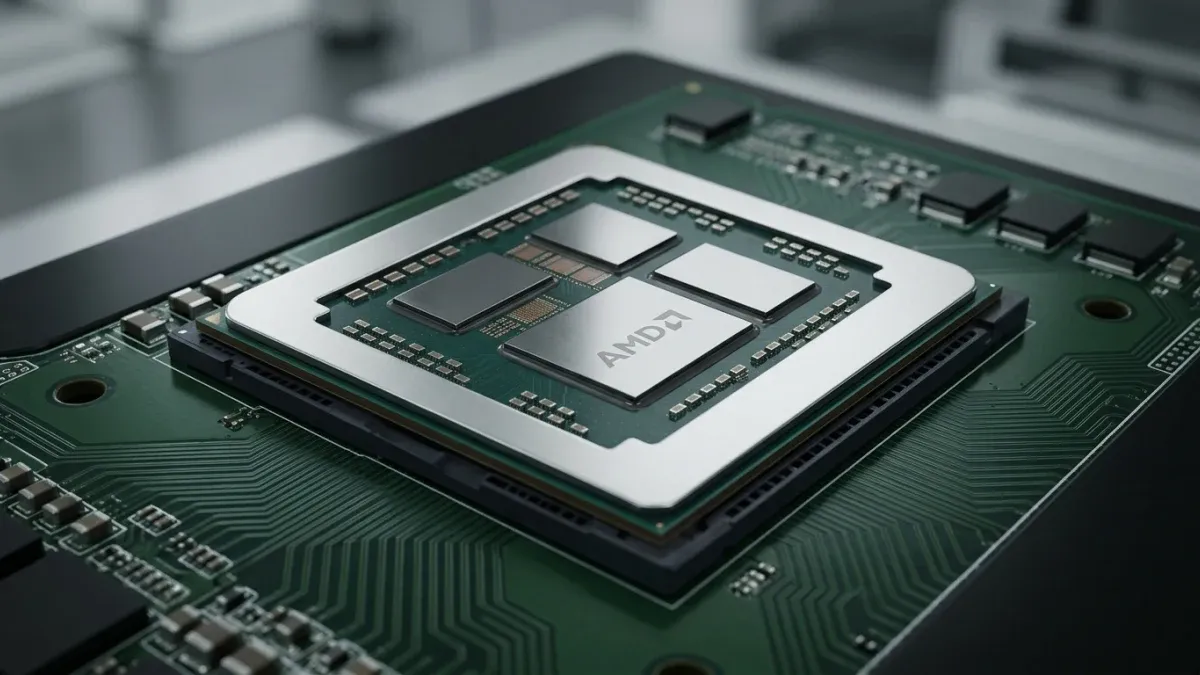
AMD announced more than $10 billion in investments across the Taiwan ecosystem to expand strategic partnerships and scale advanced packaging manufacturing for next-generation AI infrastructure.
Working with strategic partners in Taiwan and globally, AMD is advancing leading-edge silicon, packaging and manufacturing technologies that enable higher performance, greater efficiency and faster deployment of AI systems. These efforts build on AMD's deep ecosystem partnerships and long-standing leadership in chiplet architectures, high-bandwidth memory integration, 3D hybrid bonding and rack-scale...