Computex 2026: Intel Arc G3 SoCs claim 42% uplift vs Ryzen
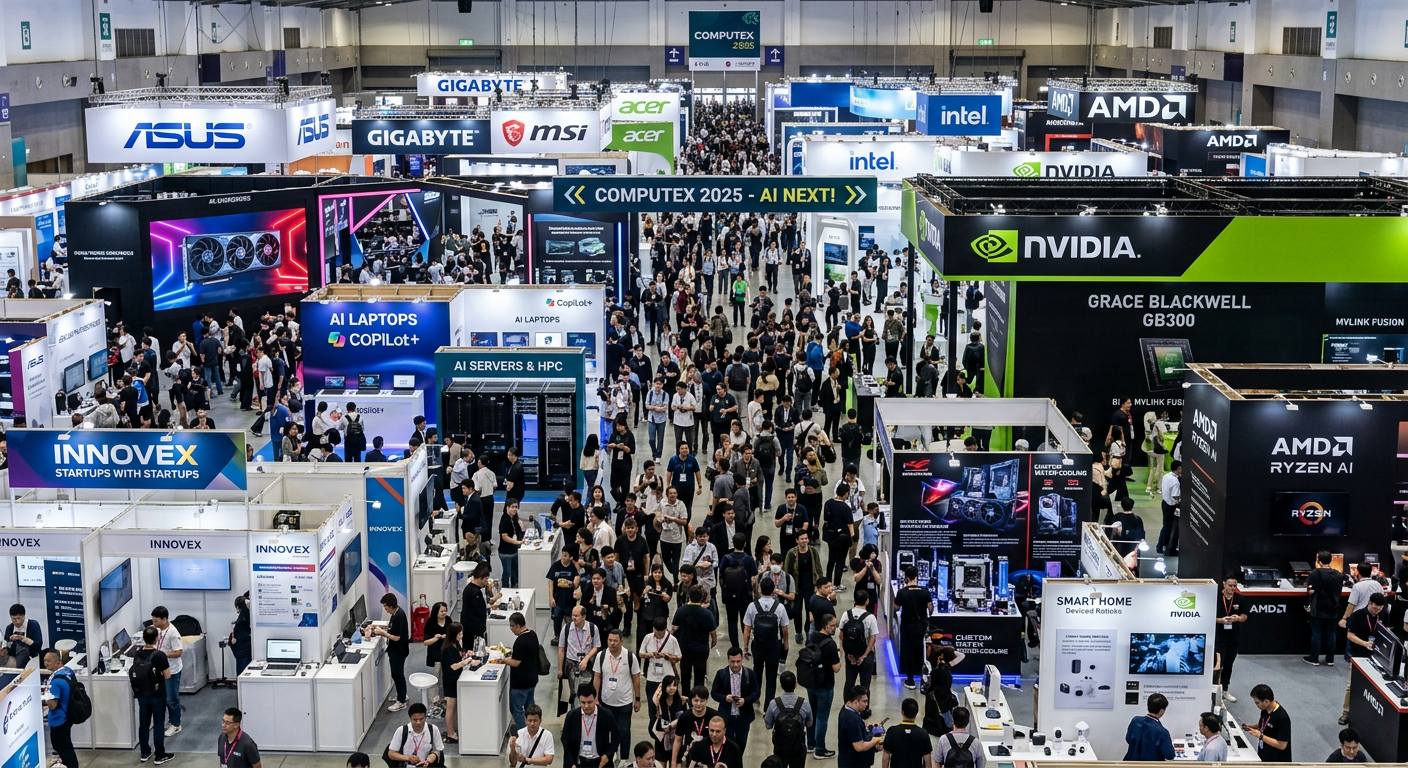
Each June in Taipei, the PC hardware industry converges for Computex, a sprawling trade show that highlights new laptops, displays, cooling, storage, CPUs, and motherboards. This year’s edition carried the theme “AI Together,” and exhibitors reflected the industry’s split between cost-conscious refreshes and ambitious, expensive hardware intended to support AI workloads and novel manufacturing techniques.
Market forces and product mix
Suppliers emphasized two contrasting responses to rising hardware costs and changing demand. Some vendors pushed for more affordable components and backward-compatible options, while others unveiled high-end designs aimed at next-generation personal computing. Notable examples include AMD’s reintroduction of a four-year-old CPU model — a move likely to encourage DDR4-based builds — alongside new SATA SSD announcements that promise lower-cost storage alternatives.
Skeptical Victory Lap
Notable showstoppers
Several product categories stood out. Handheld gaming PCs received attention for offering alternatives to AMD’s handheld dominance. A Windows laptop design was presented as a competitive counterpoint to Apple’s MacBook Neo concept. At the other extreme, a motherboard prototype featuring 3D-printed metal construction and a reported 64 power phases appeared aimed at extreme overclocking and industrial-strength power delivery rather than mainstream consumers.
Intel Arc G3 Extreme
Intel introduced the Arc G3 family as a focused effort to address handheld gaming. The company described the new parts as GPUs with integrated CPUs, and engineered two system-on-chips specifically for compact gaming devices rather than repurposing laptop silicon. To better suit handheld power envelopes, Intel removed two P-cores and reduced the complexity of the Thunderbolt and display engines.
Intel also highlighted a feature called Intelligent Bias Control (IBC), which can disable P-cores at lower power budgets and run games solely on E-cores. The rationale is that many titles are GPU-bound, so avoiding constant high-power P-core operation can smooth frame delivery and extend battery life. Early demonstrations included Forza Horizon 6 running on Acer’s Predator Atlas 8 at native 1920 x 1200 on High settings at above 60 fps without upscaling or frame generation, and playable performance in Clair Obscur: Expedition 33. Intel cited a performance uplift claim of 42% versus the Ryzen Z2 Extreme, a figure that will require independent benchmarking across multiple devices to validate. Jake Roach contributed the hands-on impressions quoted from the show floor.
Suggested Links
AMD product page for Ryzen 7 5800X3D: https://www.amd.com/en/products/cpu/amd-ryzen-7-5800x3d