Google's Universal Cart tracks price drops across retailers
Google's Universal Cart, which it previewed earlier this year, is an intelligent shopping cart and a new hub for shopping on Google. Google describes it as part of its practical, “second track” of commerce work, which focuses on tools that give shoppers confidence and control, as opposed to agentic capabilities that act on a user's behalf. The cart is meant to mirror how people shop across Google without losing track of their items, their savings, or the merchants they trust. It helps organize shopping, keeps track of items saved from across retailers, surfaces promos, and offers checkout powered by the Universal Commerce Protocol (UCP). Universal Cart is rolling out in the U.S. across Google Search and in the Gemini app.
Google frames the cart around four capabilities, aimed at holiday shopping.
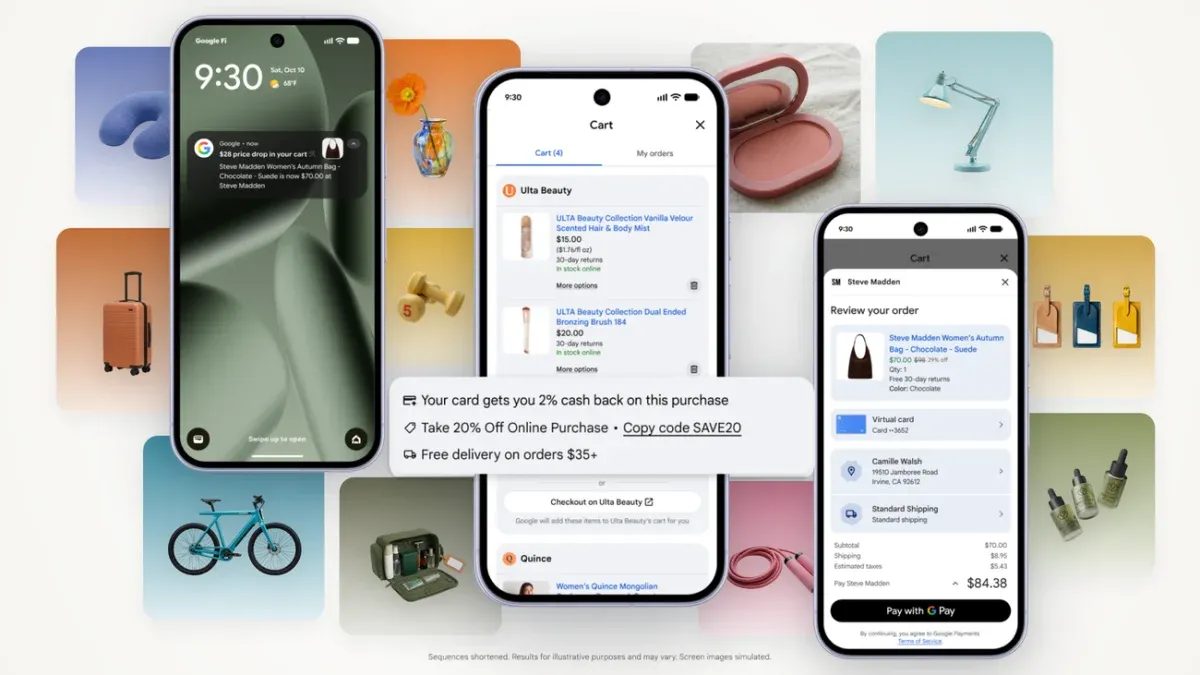
Save products from multiple retailers. Universal Cart is presented as a more organized alternative to keeping tabs open or saving screenshots. The cart saves progress across Google, so shoppers don't have to start over. Google's example: a user saves a handbag from Steve Madden in AI Mode in Search, then later adds a sweater from Quince and lipgloss from Ulta Beauty in the Gemini app. All three items are waiting in the cart when the user returns, so they can pick up where they left off.
Track pricing and inventory changes. The cart is built on Google's Shopping Graph, which contains more than 60 billion continually refreshed product listings. Using that data, it works in the background and sends notifications about price drops or when an item comes back in stock, covering the entire saved list.
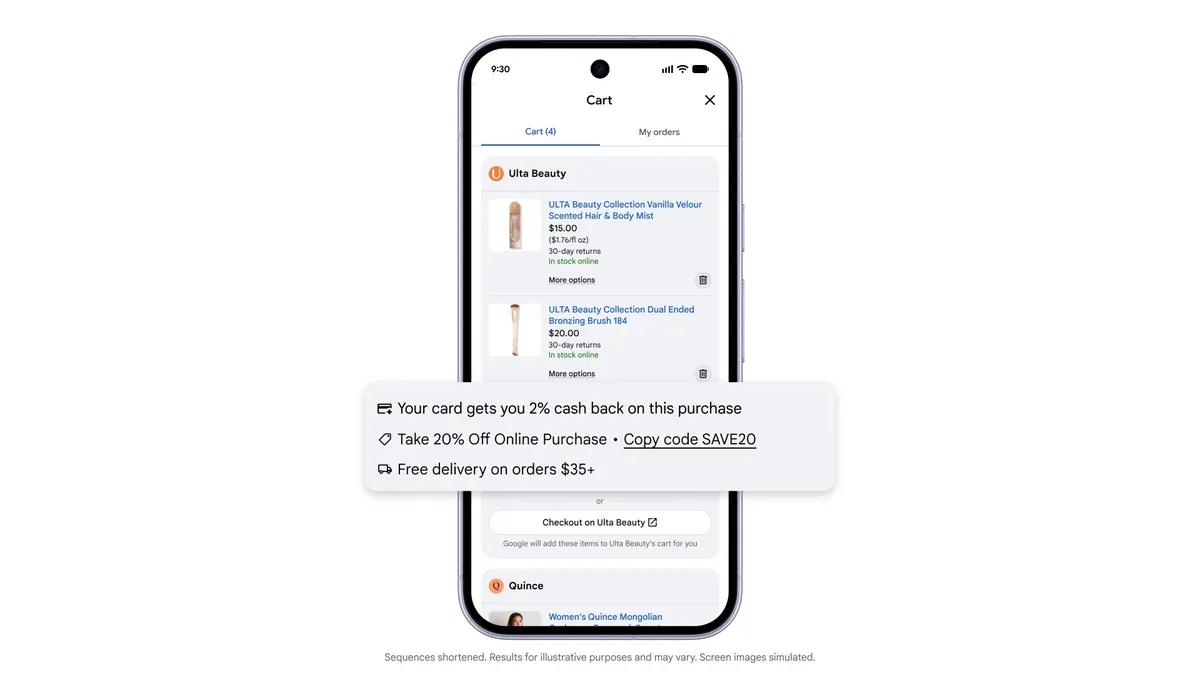
Find hidden savings. The cart's reasoning is meant to anticipate needs. Google's example is a shopper with several credit cards who doesn't know each card's benefits. Because Universal Cart is built on Google Wallet, it understands card perks and can help the user choose between payment methods. It also shows relevant promo codes directly in the cart.
Check out with confidence. Shoppers can pay with Google Pay in a few taps at many stores directly within the cart, or transfer items to the merchant's own cart to finish buying on the retailer's site. Google names Nike, Sephora, Target, Ulta Beauty, Walmart, Wayfair, and many Shopify merchants as participants. Either way, the merchant provides direct confirmations and customer support and remains the seller of record.
Google positions the cart as one part of a broader push to help shoppers “make the best shopping choices” as the holiday season ramps up.
Universal Cart is rolling out in the U.S. across Google Search and the Gemini app. The article does not give a specific date or pricing, since the cart is a free shopping feature within Google's products.