Google Cloud is bringing OpenAI's newest lineup into its model garden, and the pitch is simple: stop forcing one model onto every job. From heavyweight research tasks to cheap everyday work, enterprises are being offered a menu, but the real question is what happens to their data, their budgets, and their freedom to walk away.
OpenAI's GPT-6 Astra, GPT-6.1 Sol, and GPT-6 Luna are joining Google Cloud's model garden, making Google Cloud the only hyperscale cloud provider with access to all three leading closed-source LLMs. The models sit alongside more than 200 first-party, third-party, and open models on a unified enterprise AI platform. Google Cloud frames the move as an extension of its long-standing emphasis on choice, enterprise-grade governance, and price-performance, and as a way for customers to run agentic workloads across the models and infrastructure that best balance cost, capability, and performance.
The central argument is that enterprise AI should match each workload to the right model rather than rely on one model for every task. Google Cloud positions the three OpenAI models across that spectrum. GPT-6 Astra is designed for demanding work across coding, computer use, professional tasks, and scientific research. GPT-6.1 Sol offers near-Astra intelligence at lower cost across agentic coding, computer use, and professional work. GPT-6 Luna is a fast, cost-efficient model for everyday work at scale.
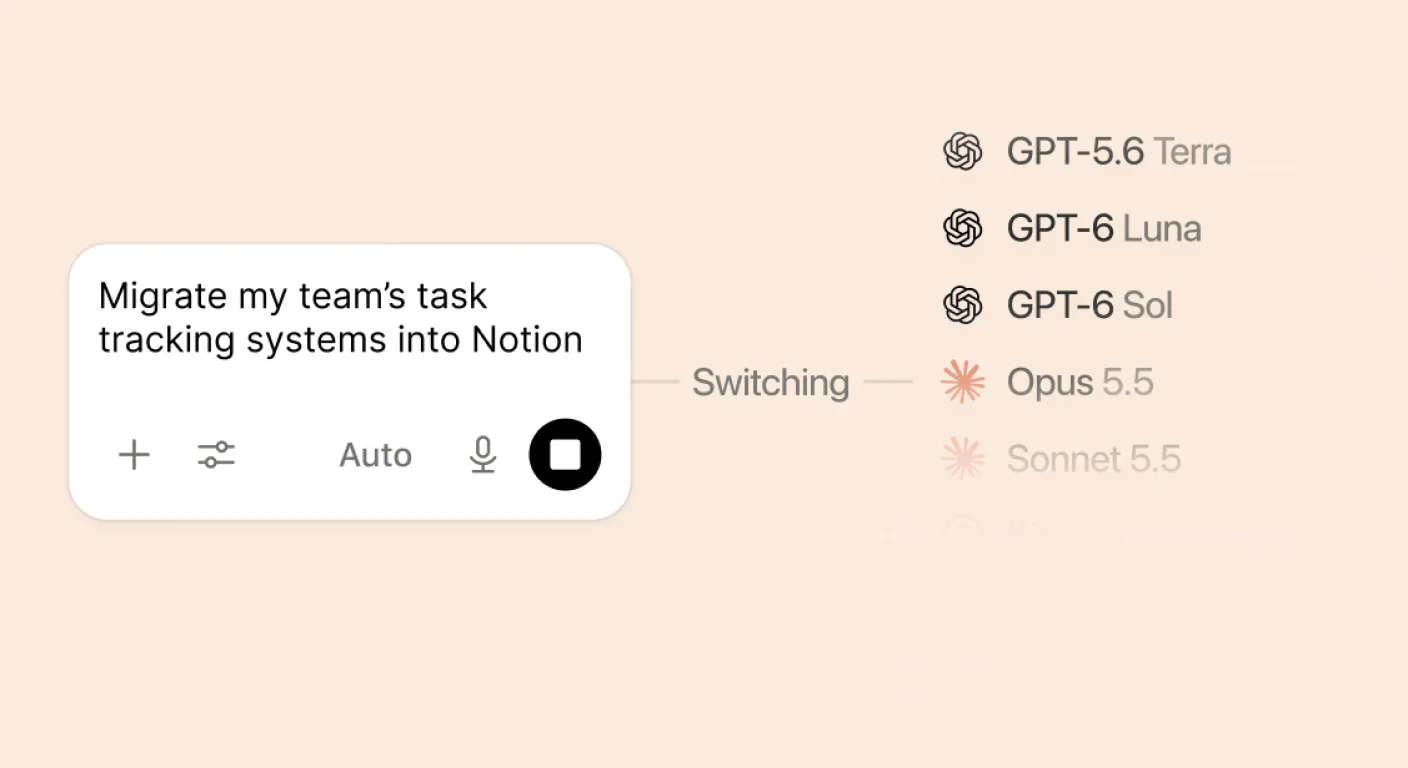
Customers can dynamically select and swap models for any use case based on performance, latency, and cost efficiency, without architectural lock-in or separate vendor contracts. Billing is also consolidated. Because OpenAI models are transacted directly through Google Cloud Marketplace, all usage appears on a single Google Cloud invoice, draws down existing cloud commitments, and counts toward Flexible Savings Plans (FSP) across model providers.
Google Cloud says governance is built in rather than added later. Running any third-party or OpenAI workload on the Gemini platform is meant to meet the company's most rigorous enterprise standards, and the security commitments fall into three areas:
Strict data perimeters: Customer prompts, context, and outputs remain entirely within the customer's designated data perimeter and are never used to train foundation models. Zero Data Retention (ZDR) options are coming soon.
Isolated access boundaries: OpenAI models run on dedicated Google Cloud infrastructure, with Confidential Compute coming soon. All queries route through hardened, isolated gateways, keeping data transit within Google Cloud's secure environment, and third-party model providers have no unauthorized access to the customer's cloud environment.
Unified auditing and identity: Every agent and model interaction operates under an authenticated identity, giving IT administrators end-to-end visibility, VPC Service Controls protection, and unified audit logging across the enterprise footprint.
Michael Gerstenhaber, VP of Product Management for Gemini at Google Cloud, introduced the launch by stressing that openness and choice are key to the platform's foundation.
Key Features at a Glance
Three OpenAI models: GPT-6 Astra, GPT-6.1 Sol, and GPT-6 Luna give teams a range from demanding work to high-volume everyday tasks.
Model choice: More than 200 first-party, third-party, and open models sit on one platform, and customers can swap models without architectural lock-in.
Single invoice: OpenAI usage appears on one Google Cloud invoice and draws down existing cloud commitments.
Savings plan eligibility: Usage counts toward Flexible Savings Plans (FSP) across model providers.
Data perimeter: Prompts, context, and outputs stay within the customer's designated perimeter and are never used to train foundation models.
Dedicated infrastructure: OpenAI models run on dedicated Google Cloud infrastructure behind hardened, isolated gateways.
Identity and audit: Every agent and model interaction runs under an authenticated identity, with VPC Service Controls protection and unified audit logging.