openai

Skip to main content

Tag: openai

Bold yellow and black text reads "Transformers × GGUF" with navigation labels above and a dark bar below listing "ggml kernels" and model components.

Hugging Face Adds GGUF Model Support to Transformers

Hugging Face is adding support for running GGUF models efficiently in transformers, allowing users to load checkpoints sized for their laptop's memory through the familiar transformers APIs. Pick a GGUF from the Hub, load it with from_pretrained, and start generating on your own machine. Running AI models on your laptop has become much easier, and llama.cpp has been a big part of that. Its inference engine powers local AI tools such as Ollama, LM Studio, and Jan. Alongside projects like MLX, it has helped make local inference a practical option for everyday use. GGUF, developed by the...

Continue reading

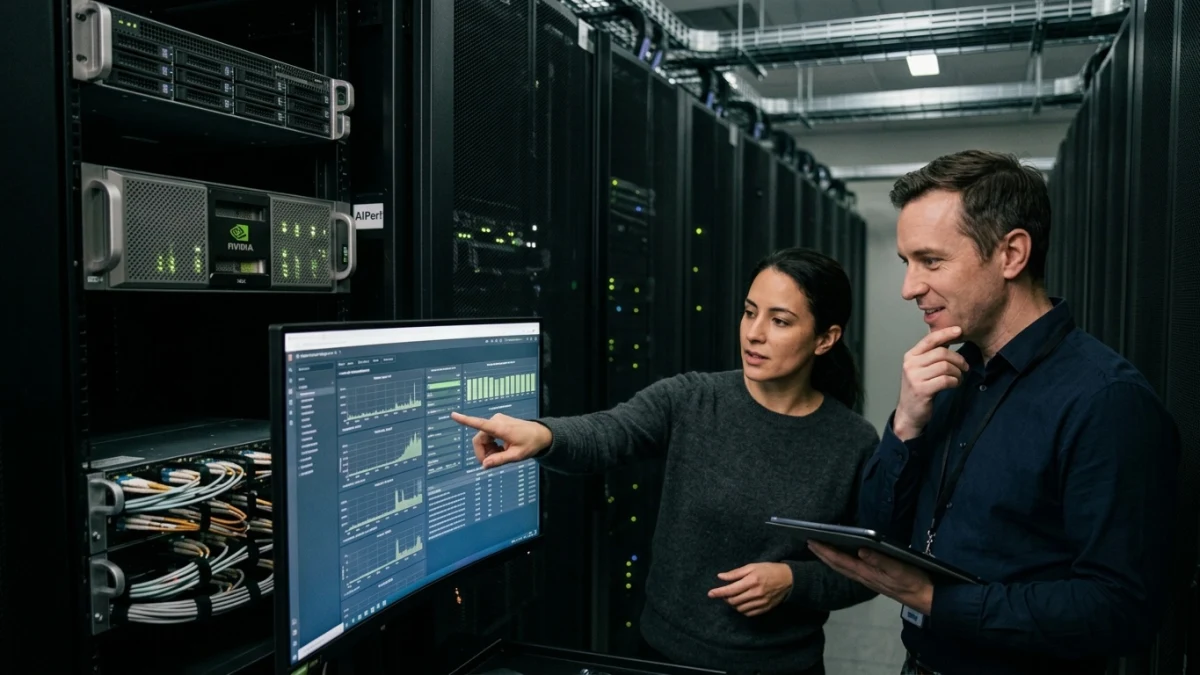
Two professionals examine performance graphs on a monitor in a server room with NVIDIA hardware.

Benchmarking LLM Performance at Scale with NVIDIA AIPerf

You're deploying a model on a system. It starts up, prompts are getting responses. Now the hard question: Is this fast? Your instincts might lead you to send curl commands, hand-roll an asyncio script, or write yet another one-off load generator. All these approaches share the same problems: single-process performance limits, Python's GIL capping concurrency, or numbers measured against a reference you built yourself. Either way, you end up with results you can't fully trust, attached to tooling you'll have to rewrite the moment requirements change. What you need is a load client that can...

Continue reading

Agent Skill Security: ClawHub's Open Security Pipeline

Agent Skill Security: ClawHub’s Open Security Pipeline

Agent skill files have a reputation for being insecure, and that reputation is earned. When we launched ClawHub alongside OpenClaw, we were immediately targeted by actors who tried to publish skills bundling known malware. We partnered with VirusTotal to flag those skills and ban the publishers automatically. Traditional malware scanning is a relatively solved problem. Identifying agentic risk is not. A skill can claim to summarize your logs while bundling a script that ships them off your machine. A well-meaning skill can point your agent at a CLI that wipes production on the wrong flag....

Continue reading