intel

Skip to main content

Tag: intel

A close-up view of an AMD EPYC processor mounted on a server motherboard, illuminated against a dark background.

Server Consolidation: How AMD EPYC Delivers Efficiency and Future Capacity

Server consolidation is a material project for IT organizations managing data center infrastructure. The objective is straightforward: move workloads from older, less-efficient systems onto fewer, more capable servers without sacrificing performance or disrupting critical applications. Done well, consolidation improves the economics of the server estate. It can free rack space and power, reduce per-core software licensing costs, and create headroom for future growth—whether the next priority is expanding business applications, analytics, or AI. AMD EPYC Built for Efficiency Effective...
Continue reading

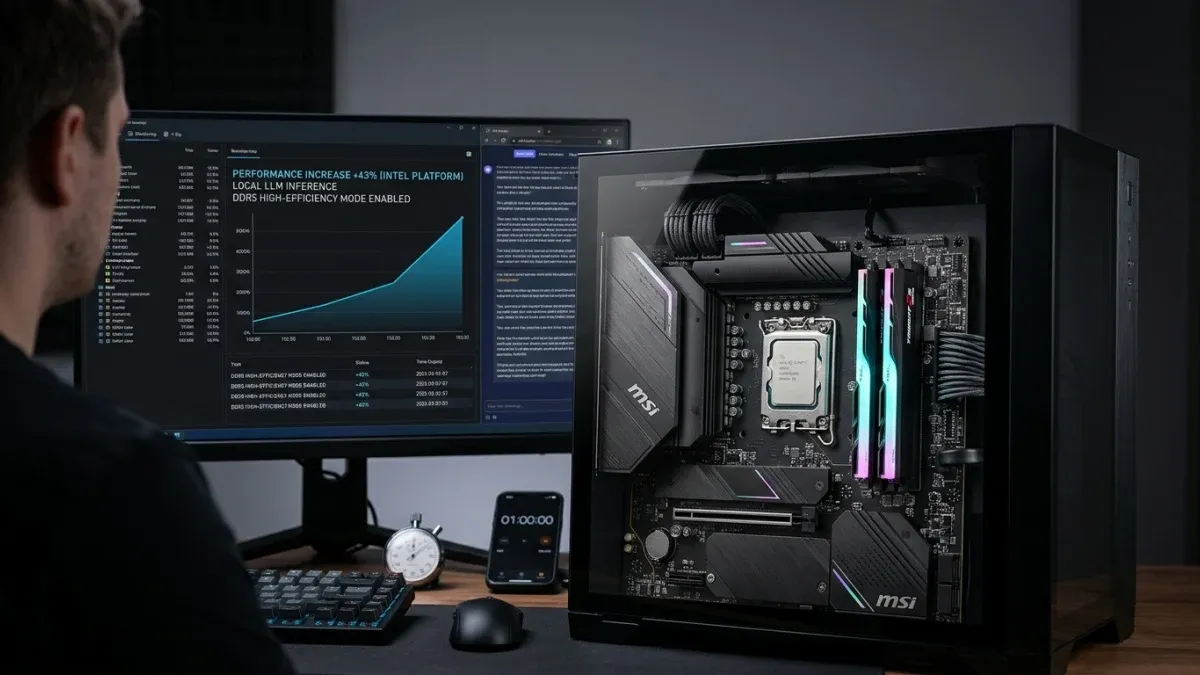
A person views a monitor displaying performance graphs next to an open MSI PC case with RGB lighting and components.

Maximize Local LLM AI Performance with MSI BIOS Tweaks

Computing power on AI platforms has become increasingly critical. While upgrading hardware delivers noticeable AI performance gains, it can be costly. MSI conducted hands-on benchmark tests showing that simply tweaking High-Efficiency Mode—a built-in memory overclocking option in MSI BIOS—can optimize DDR5 memory performance and significantly accelerate Large Language Model (LLM) performance without purchasing additional hardware. Testing on AMD and Intel Platforms: Higher Tokens/s and Lower Latency TTFT (Time to First Token — MSI Using the AMD Ryzen 9 9950X3D2 processor, benchmark results...

Continue reading

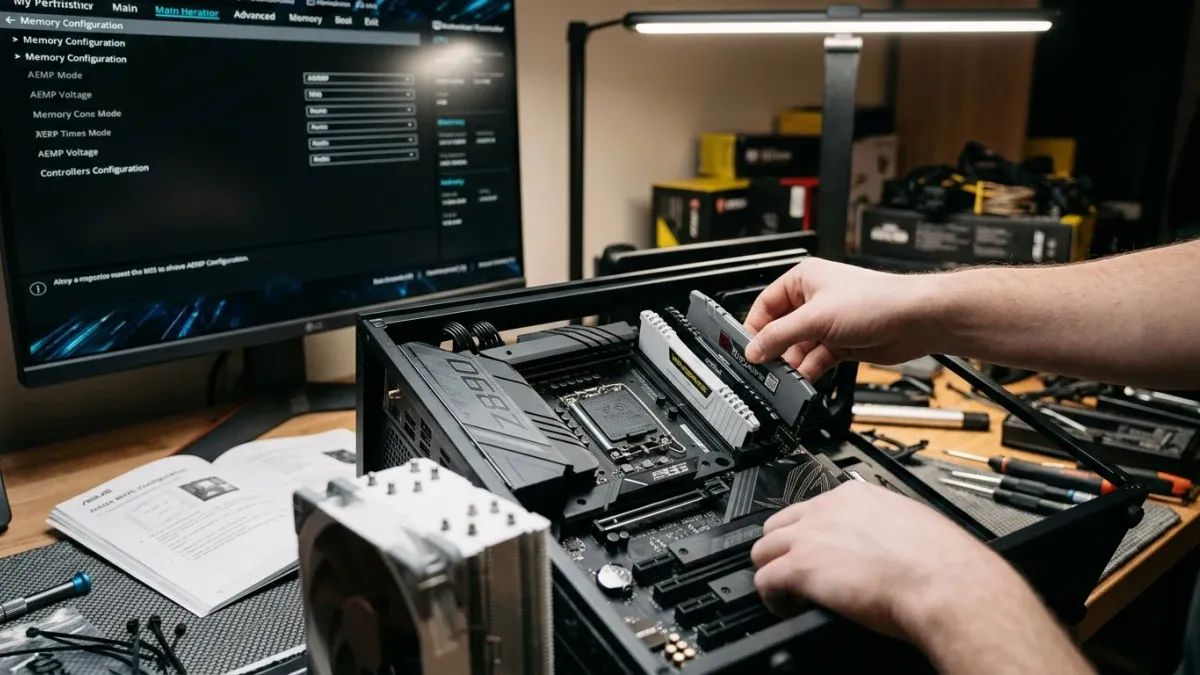
Hands installing RAM into an open PC case, with a monitor displaying BIOS memory settings in the background.

ASUS Launches AEMP Mix Tuning to Support Mixed DDR5 Configurations on Intel 800-Series Motherboards

Some PC builders prioritize maximum performance from their memory kits, while others prioritize compatibility. For builders in the latter group seeking an affordable way to get a PC running with non-standard memory configurations, ASUS has launched AEMP Mix Tuning, a new BIOS feature available now for ASUS Intel 800-series motherboards via firmware update. AEMP Mix Tuning helps users operate mixed memory configurations of 2-4 DRAM sticks with different models, frequencies, and capacities. The compatibility-first tuning algorithm prioritizes reliable system boots and stable operation while...

Continue reading

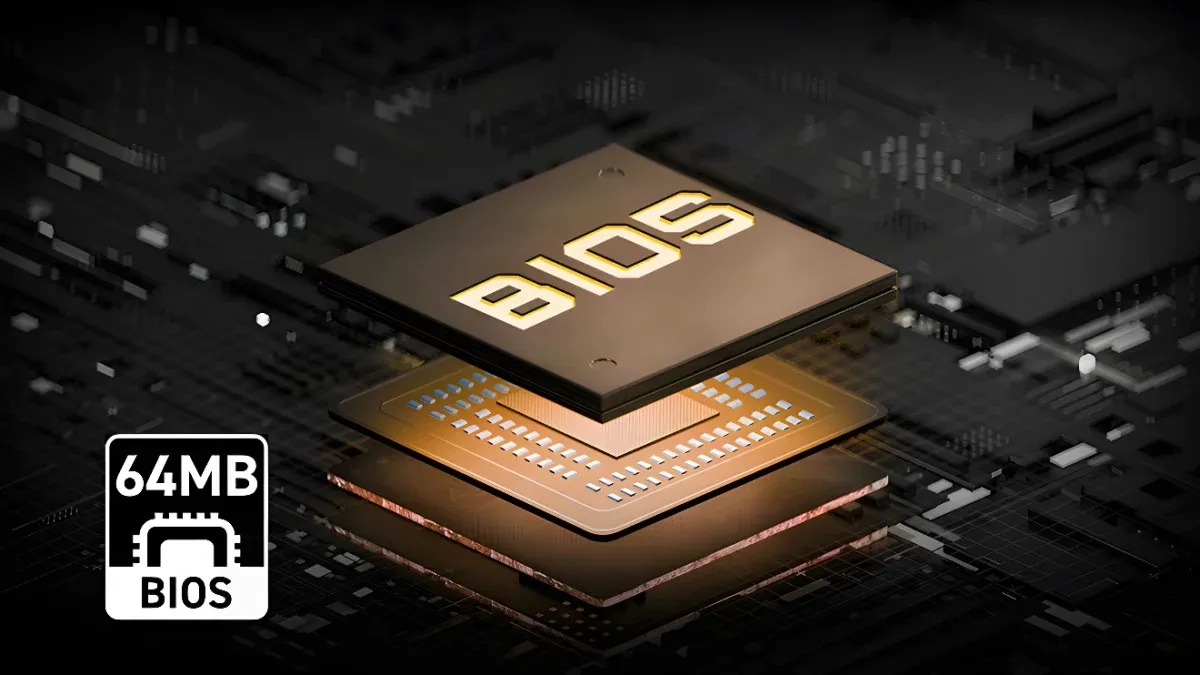
A golden BIOS chip labeled "BIOS" sits atop a circuit board, with a 64MB capacity icon nearby.

Why BIOS ROM Capacity Matters for Modern Motherboards

When choosing a motherboard, specifications such as power delivery, PCIe support, memory speed, and connectivity usually receive the most attention. But another specification is becoming increasingly important for modern platforms: BIOS ROM capacity. The ROM, or flash memory chip, on a motherboard stores its UEFI firmware. This firmware initializes the processor, memory, storage, graphics, and other hardware before the operating system starts. It also contains the BIOS interface and many of the configuration and compatibility components required to support different processors and system...

Continue reading

Close-up of a silver GeForce RTX graphics card with ventilation grilles, installed in a computer case.

What Hardware Specs Matter for Local AI

VRAM capacity decides which models you can run. GPU memory bandwidth decides how fast they run. Storage, PCIe, and system RAM decide how quickly you can load and swap them. While VRAM capacity dominates the conversation—and fairly so, since it limits whether a model fits at all—zooming out to the entire inference process reveals that capacity is just one factor. When you deploy system memory offloading or multi-GPU setups to accommodate oversized models, the rest of your system becomes even more important in determining responsiveness. This guide walks through the full journey from loading...

Continue reading

A brushed metal laptop base with glowing red MSI logo, Intel Core Ultra chip, and copper heat pipes.

MSI Prestige 14/16: Core Ultra CPUs, 20% Lighter Chassis

The modern workplace is no longer a static location but a dynamic environment requiring tools that balance high-tier performance with extreme portability. The all-new MSI Prestige 14 and 16 series represents a significant evolution in this space, featuring a ground-up redesign tailored for professionals who refuse to choose between power and mobility. This generation introduces a sophisticated rounded-edge aesthetic, replacing sharp industrial angles with a modern, ergonomic aluminum alloy chassis. The refinement is practical as well as visual; the Prestige 14 is now 20% lighter than its...

Continue reading