amd

Skip to main content

Tag: amd

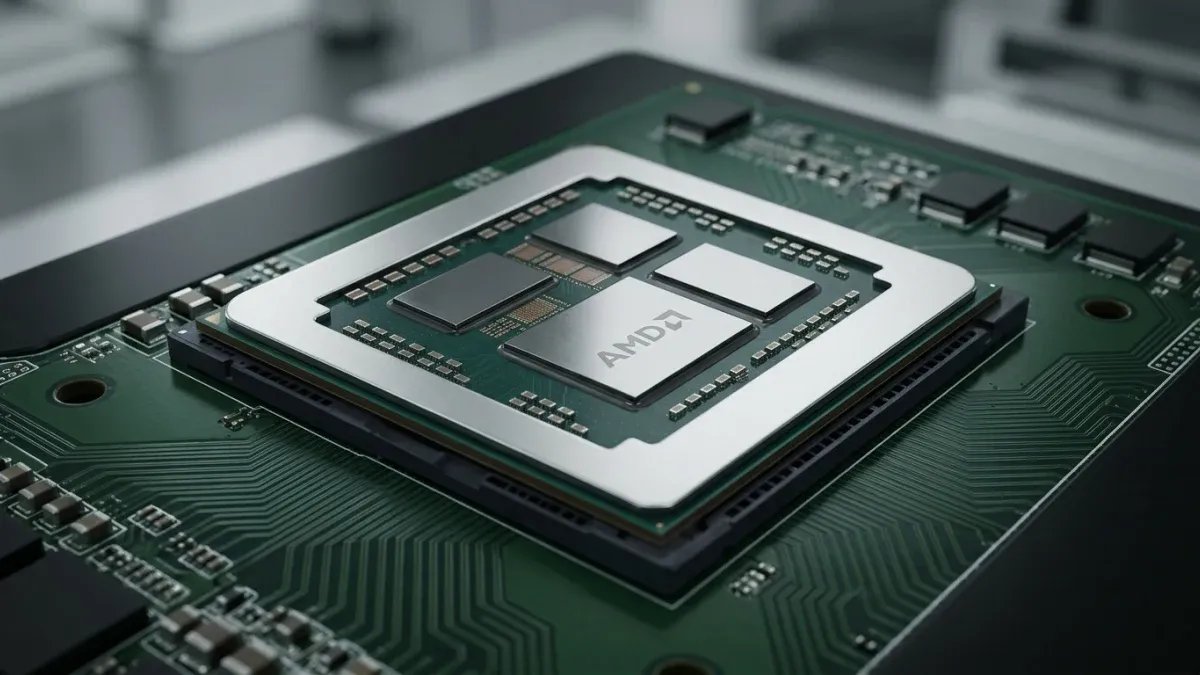
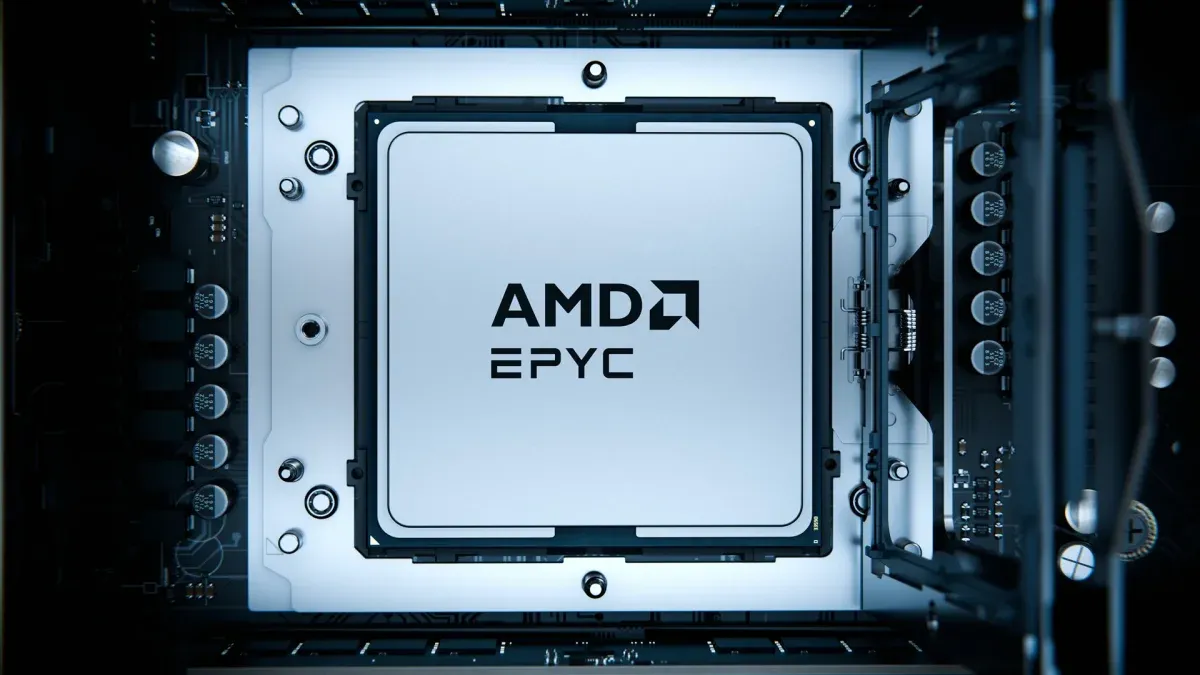
A close-up view of an AMD EPYC processor mounted on a server motherboard, illuminated with cool blue lighting.

AMD’s 6th Gen EPYC CPUs Address Shifting Demands of Agentic AI

Two years ago, AI infrastructure planning centered on training. Then inference took the lead. Now agentic AI—which turns a single request into a shifting chain of retrieval, tool calls, code execution, and results—creates workflows that change how much compute is needed and where, with every execution. Infrastructure built around a single point in time risks misalignment with evolving requirements. Flexibility is no longer a feature; it is a requirement at every layer of the stack, including the CPUs supporting agentic pipelines. Enterprises already understand this principle. Databases,...

Continue reading

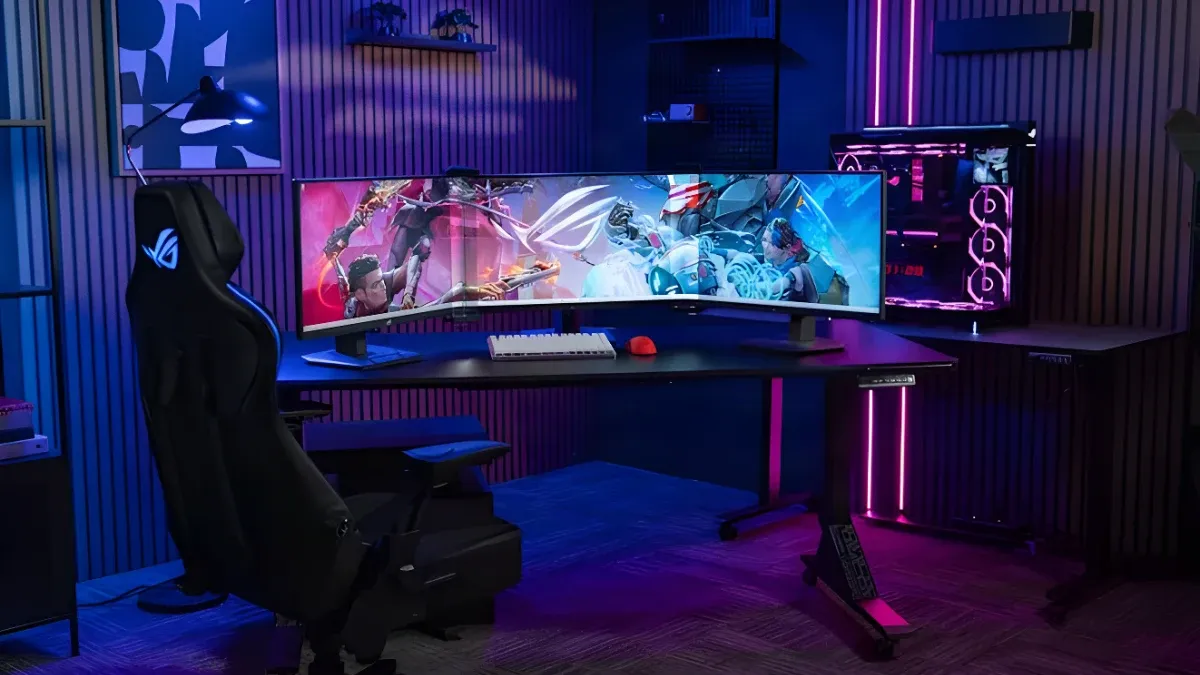
Curved triple-monitor setup on a sleek desk with RGB lighting, gaming chair, and custom PC tower.

Multi-Monitor Setups: Five Ways to Build One

Watch enough movies and you might start to believe that a multi-monitor setup is something exotic—the domain of genius hackers, paranoid supervillains, and hyper-vigilant day-traders. The truth is that people from all walks of life use multi-monitor setups. It's one of the most practical upgrades you can make to a PC, and it's easy to set up and use. Gamers keep digital worlds front and center while Discord, a map, and a guide sit one glance away. Streamers read chat live and monitor their output without breaking immersion. Colorists keep footage in view while every scope and panel lives on...

Continue reading

A person views a monitor displaying performance graphs next to an open MSI PC case with RGB lighting and components.

Maximize Local LLM AI Performance with MSI BIOS Tweaks

Computing power on AI platforms has become increasingly critical. While upgrading hardware delivers noticeable AI performance gains, it can be costly. MSI conducted hands-on benchmark tests showing that simply tweaking High-Efficiency Mode—a built-in memory overclocking option in MSI BIOS—can optimize DDR5 memory performance and significantly accelerate Large Language Model (LLM) performance without purchasing additional hardware. Testing on AMD and Intel Platforms: Higher Tokens/s and Lower Latency TTFT (Time to First Token — MSI Using the AMD Ryzen 9 9950X3D2 processor, benchmark results...

Continue reading

A golden BIOS chip labeled "BIOS" sits atop a circuit board, with a 64MB capacity icon nearby.

Why BIOS ROM Capacity Matters for Modern Motherboards

When choosing a motherboard, specifications such as power delivery, PCIe support, memory speed, and connectivity usually receive the most attention. But another specification is becoming increasingly important for modern platforms: BIOS ROM capacity. The ROM, or flash memory chip, on a motherboard stores its UEFI firmware. This firmware initializes the processor, memory, storage, graphics, and other hardware before the operating system starts. It also contains the BIOS interface and many of the configuration and compatibility components required to support different processors and system...

Continue reading

DFlash Speculative Decoding on AMD Instinct MI355X: Up to 5× Faster Qwen3.5 Inference

DFlash Speculative Decoding on AMD Instinct MI355X: Up to 5× Faster Qwen3.5 Inference

Autoregressive decode generates one token per model forward pass, so single-request latency is bounded by how fast you can stream weights through the GPU — not by compute. Speculative decoding attacks that bottleneck by letting a small draft model propose several tokens that the large target model then verifies in a single parallel pass. We bring DFlash — a block-diffusion drafter — to AMD Instinct MI355X through vLLM on ROCm, benchmark it against Qwen3.5's built-in MTP drafter, and quantize the target model to mxfp4 to demonstrate that speculation and quantization stack. The result: up to...

Continue reading

Onimusha: Way of the Sword GPU Benchmarks — RTX 50 Series at 1080p, 1440p, and 4K

Onimusha: Way of the Sword GPU Benchmarks — RTX 50 Series at 1080p, 1440p, and 4K

Capcom's Onimusha: Way of the Sword launched on September 4, the first mainline entry in the series after a long silence, and it reached Steam's top new releases chart in its launch week. It also sets a hard floor on the PC side: Windows 11 as the minimum OS, an SSD install, and a 16GB memory baseline — machines still on Windows 10 will not run it at all. We benchmarked five GeForce RTX 50 graphics cards in-house — the RTX 5080, RTX 5070 Ti, RTX 5070, RTX 5060 Ti and RTX 5060 — at 1080p, 1440p and 4K, with DLSS 4.5 off and on, across two settings profiles and 60 logged configurations. Test...

Continue reading

Two Corsair liquid coolers, one black and one white, each with dual fans and digital displays showing temperature and RPM.

CORSAIR Launches Second-Generation NAUTILUS II Liquid Coolers and RS II Fans

CORSAIR announced the launch of its second-generation cooling hardware: NAUTILUS II all-in-one liquid CPU coolers and updated RS II and RS II ARGB fans. These components connect directly to the motherboard for simple fan management without external controllers, offering affordable and effective cooling with straightforward installation and maintenance. NAUTILUS II RS LCD The Nautilus II RS LCD succeeds the first-generation model with a 67% larger 3.5″ display, an upgraded FlowDrive 2S pump, a thinner AMD-optimized cold plate, and new RS II fans. Available in black or white with 240mm or...

Continue reading

Close-up of a silver GeForce RTX graphics card with ventilation grilles, installed in a computer case.

What Hardware Specs Matter for Local AI

VRAM capacity decides which models you can run. GPU memory bandwidth decides how fast they run. Storage, PCIe, and system RAM decide how quickly you can load and swap them. While VRAM capacity dominates the conversation—and fairly so, since it limits whether a model fits at all—zooming out to the entire inference process reveals that capacity is just one factor. When you deploy system memory offloading or multi-GPU setups to accommodate oversized models, the rest of your system becomes even more important in determining responsiveness. This guide walks through the full journey from loading...

Continue reading

Black ASUS ProArt motherboard with gold accents, CPU socket, RAM slots, and M.2 slots, featuring geometric design elements.

ASUS Showcases AI-Powered ProArt Creator Solutions at IBC 2026

The lineup spans professional SDI monitors, advanced OLED display technology, and AI-accelerated creation powered by NVIDIA RTX Spark, demonstrating how AI now touches every stage of production: from on-device generation and inference on ultra-portable hardware to remote access to full workstation-class GPU power to real-time AI video generation on multi-GPU workstations. AI Creator Laptops and Portable Platforms At the center of ASUS's AI creator story are the ProArt P16 and ProArt P14, slim Windows creator laptops built for personal AI-agent workflows and powered by RTX Spark. They...

Continue reading

  • 1
  • 2