Frontier Intelligence Goes Local
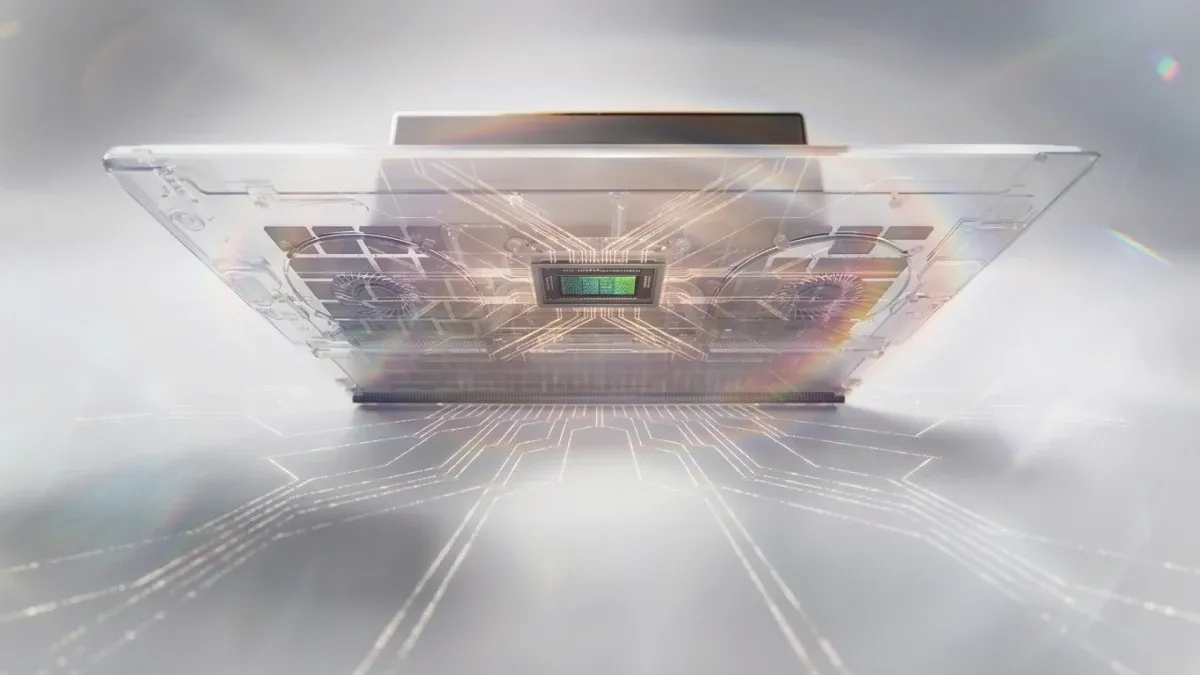
At IFA 2026, NVIDIA, Microsoft and their partners are unveiling faster inference capabilities and simplified tools for running AI agents locally on NVIDIA hardware. New compact NVIDIA RTX Spark Windows PCs arrive in October, offering AI enthusiasts, developers and creators local, secure agent deployment.
Simplified local AI support for NVIDIA GPUs is coming to Hermes Agent, OpenClaw and Perplexity Portable Computer.
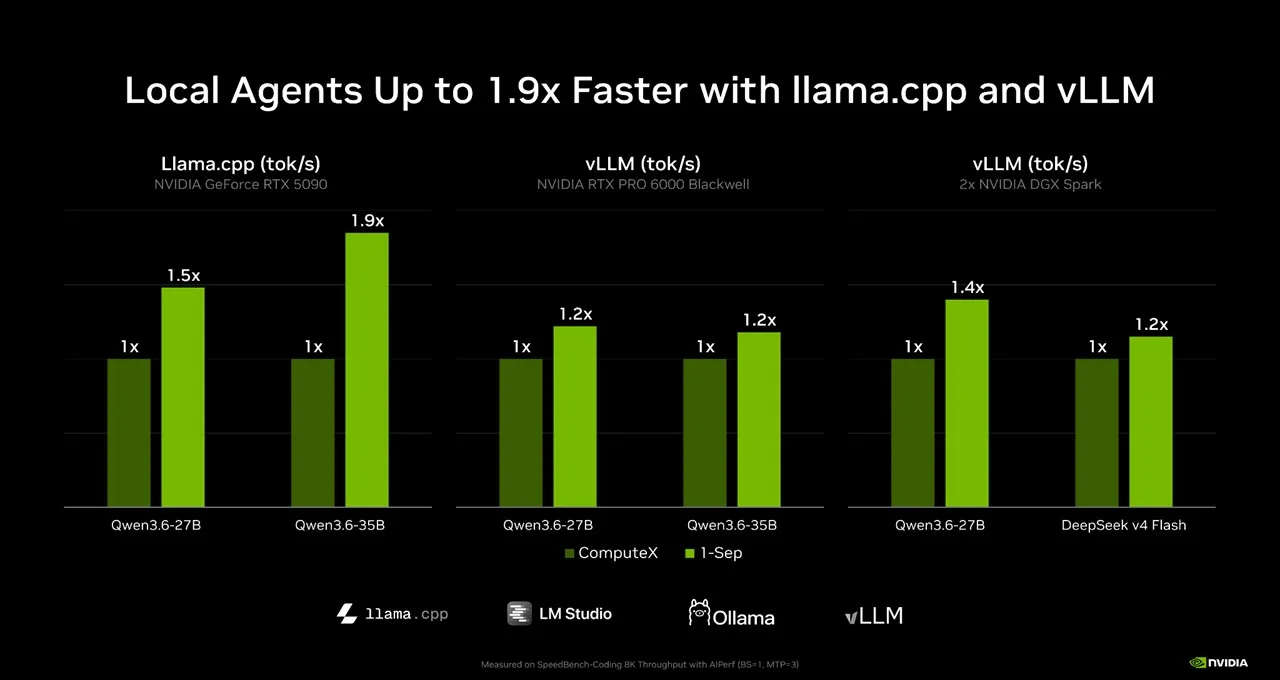
Up to 1.9x faster local inference — New llama.cpp and vLLM optimizations are available now directly through LM Studio and Ollama.
NVIDIA PAIR — a Personal AI Router tool that intelligently distributes AI inference across PCs on a user's local network.
NVIDIA RTX Spark is coming this October; Lenovo and Acer are shipping new Windows PC designs in October. Electronic Arts, Embark and Ubisoft are bringing blockbuster titles to RTX Spark.
August saw several model launches optimized for local deployment:
Setting up local agents previously required choosing a model, finding a compatible inference server, configuring quantization settings and managing updates. Three widely-used agent applications now offer simplified local model setup on Windows, each built on llama.cpp with NVIDIA's latest inference optimizations, reducing manual configuration friction.
Perplexity Portable Computer — Introduced last month for Linux systems like NVIDIA DGX Spark, Portable Computer is now available on NVIDIA RTX GPUs with at least 24GB VRAM on Linux, with Windows support coming soon. Users run complete workflows locally without consuming credits, selectively escalating tasks to 15+ frontier models in the cloud when needed. Portable Computer requests permission before sending content to the cloud, keeping sensitive information on-device.
Example use cases include:
Hermes Agent — Developed by Nous Research, this general-purpose agent used by millions excels at reliability and self-improvement. Model- and provider-agnostic, Hermes is built for all-day operation on local systems. One-click setup on Windows automatically detects the NVIDIA GPU, selects an appropriate model and configuration, and runs it through integrated llama.cpp with NVIDIA inference optimizations. Linux support is coming soon. Hermes uses tools, maintains context across tasks, remembers information between sessions and creates reusable skills, becoming more capable with continued use while keeping data local.
OpenClaw — The largest AI project on GitHub with more than 380,000 stars, OpenClaw is a defining open-agent project with a fast-growing community building tools and skills. NVIDIA, Microsoft and OpenClaw simplified Windows PC setup; the OpenClaw Windows App reduces onboarding friction by automating optimized local model setup on any RTX GPU with at least 24GB VRAM.
llama.cpp delivers up to 1.9x higher throughput on GeForce RTX 5090 through kernel optimizations, enhanced speculative decoding techniques and faster prefill.
vLLM delivers 1.2x performance gains on RTX PRO 6000 Blackwell Workstation Edition and up to 1.4x on two DGX Spark clusters. New XQA attention kernels in FlashInfer and backend optimizations accelerate inference across both platforms.
These gains are available through llama.cpp and vLLM backends, accessible via LM Studio and Ollama applications.
More than half of U.S. households have two or more PCs, much of which sits idle throughout the day. NVIDIA Personal AI Router (PAIR) is a free, open-source tool that distributes local AI compute across network systems.
Agentic workflows often break complex tasks into smaller parallel jobs, but performance slows when requests compete for a single GPU. PAIR automatically discovers compatible PCs on a local network and routes independent inference requests to whichever system has capacity. It works with Ollama and LM Studio and adapts as devices join or leave the network.
For example, Hermes could split a “Sunday Reset” task—sorting through an inbox and prioritizing items—across multiple subagents, with PAIR distributing jobs across available PCs instead of queuing them on a single GPU.
The NVIDIA PAIR beta is available for Windows, macOS and Linux through graphical and terminal interfaces, supporting NVIDIA GeForce RTX 20 Series GPUs and newer, NVIDIA RTX PRO workstation GPUs (Turing architecture and newer), NVIDIA DGX Spark and Apple M4 or newer silicon.
Open image and video models enable artists to experiment with creative AI models locally, iterating without token constraints while keeping work private on-device.
CyberLink's new PhotoDirector AI PC Mode integrates diffusion models directly into creative software. Coming to PhotoDirector 365 and optimized for NVIDIA RTX Spark in October, AI PC Mode provides AI-powered tools for generative editing, image enhancement, object and distraction removal, background removal and replacement, portrait refinement and visual creation—with flexible local or cloud processing options. On NVIDIA GPUs, PhotoDirector uses TensorRT-RTX and FP8 to accelerate local AI.
NVIDIA RTX Spark arrives this October. At IFA 2026, newly announced designs joined existing OEMs shipping in October. Acer showcased its compact desktop RTX Spark concept, and Lenovo announced its Yoga Pro 9n and Yoga 9n 2-in-1.
Nobody has commented on this yet.
💬 Be the first to comment