Timestral is a new family of time-series foundation models. Its largest model has 209M parameters and ranks first on GIFT-Eval, TIME, and fev-bench. The article says this beats the previous state of the art while using only two-thirds of its parameters. Time-series forecasting has mostly relied on models trained for one dataset at a time, so a pre-trained model that forecasts well on data it has never seen is a significant change.
Why pre-trained forecasting matters
Time series is one of the most common data types in enterprise, from sensor telemetry to observability metrics. Forecasts...
Ollama Cloud now works inside full Linux computers built for agents. Through a new Ollama Connector, code running in Fly.io Sprites can call Ollama's cloud models, including kimi-k3, glm-5.3 and deepseek-v4.1-flash, without the agent ever seeing your API key.
A Sprite is a sandbox from Fly.io. Each one is a full Linux virtual machine with its own disk that stays around between sessions. Claude Code, Codex and Gemini CLI are supported out of the box, letting agents run in a sandbox to securely run commands.
How the key stays protected
You add your Ollama API key to your Fly.io...
Google has released Gemini 4 Argon, its newest model, which the company positions for deep, multi-step work in coding, finance, legal, cybersecurity, and science. Google says Argon outperforms other frontier models across several benchmark domains and ranks #1 on the Vals Index, which measures model performance across critical economic sectors such as finance, coding, legal, and tax work. The model is available today to developers and enterprises through the API in AI Studio and the Gemini platform, with access also extended to subscribers of several Google products.
Pricing and Access...
MAI-Image-2.6 and MAI-Image-2.6-Flash from Microsoft are now available on AI Gateway. Developers can generate images from text or edit existing images with one API key and no provider account, with output sizes up to 1536 × 1536.
Use MAI-Image-2.6 for final assets where image quality matters more than speed. Use MAI-Image-2.6-Flash when you need many iterations, such as exploring prompts or generating variations.
Key Features at a Glance
Spec
Value
Photorealism and text rendering
Both models support photorealistic imagery and text rendering.
Targeted edits
Edit products,...
Google is rolling out Gemini 4 Argon inside Google Antigravity, its agent-first development app, for Google AI Ultra subscribers. Argon was introduced earlier this month as Google's latest model, with frontier performance in complex workflows across real-world software engineering, enterprise knowledge work such as legal and finance, and cybersecurity defense. The Antigravity rollout puts it directly into the desktop app and the Antigravity CLI, where agents can work through multi-step engineering problems.
Google says it built Antigravity for an agent-first future, with foundational...
n8n is one of the first companies to use and integrate Google's Gemini 4 Argon model. You can use it with your existing n8n workflows or build new ones. The article covers three ways to do this: through MCP, through your own API key with the n8n Assistant, and through an Agent inside a workflow.
Connect through MCP
Model Context Protocol (MCP) is an open standard governed by the Agentic AI Foundation (AAIF). It allows your AI tools to connect to external applications and data sources. n8n has a built-in MCP server that works with any MCP client, so you can build your own workflows from your...
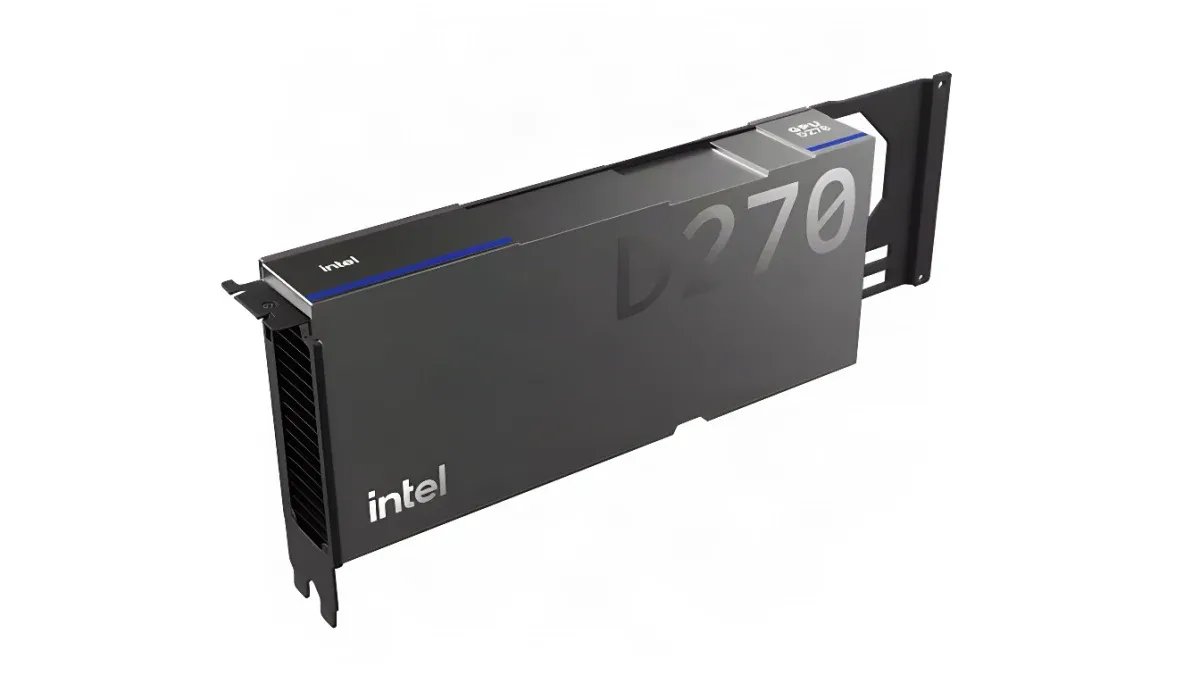
Intel used the Open Compute Project (OCP) Global Summit to share new technical details on the Intel GPU D-series, formerly code-named Crescent Island. The accelerator is built for AI inference on Intel's Xe3P architecture, and Intel positions it as a way to improve the economics of memory-intensive inference. Intel also showed new Intel Xeon-based rack designs and highlighted its open software and ecosystem work. Intel framed these moves around open models reshaping the economics of agentic AI, which is driving demand for more flexible, cost- and power-efficient infrastructure.
Why Agentic...
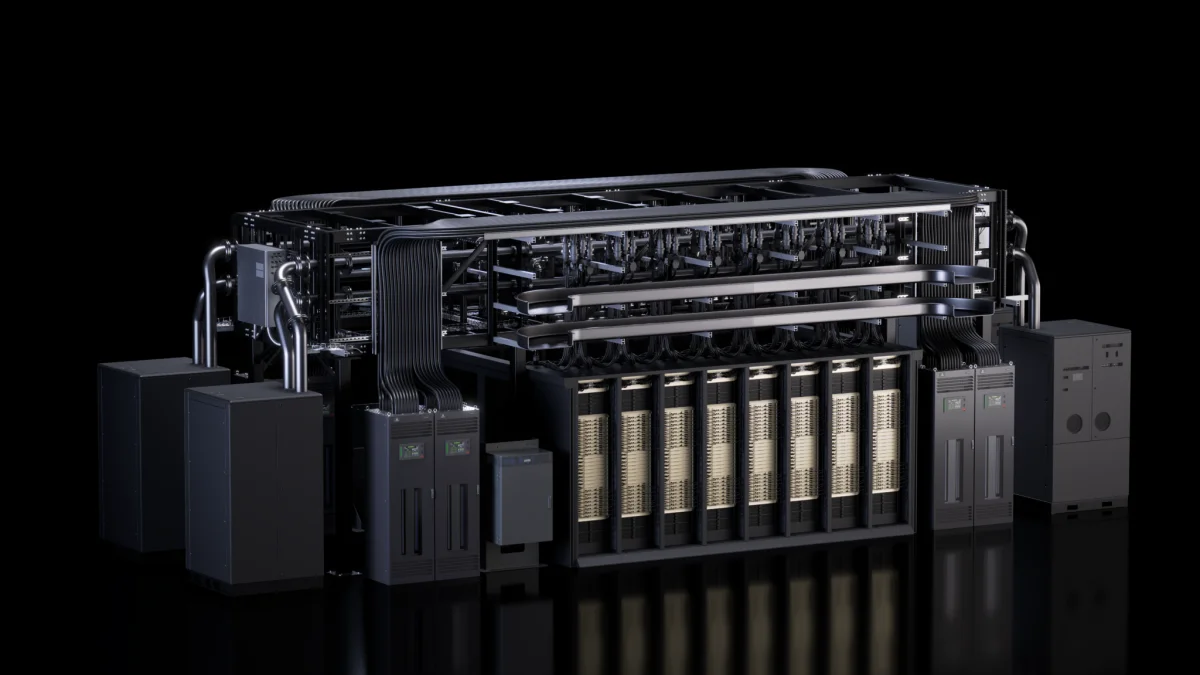
As AI factories grow from megawatts to gigawatts, building them takes more than advanced computing. At the Open Compute Project (OCP) Global Summit in San Jose, NVIDIA announced new partnerships and contributions meant to create a common foundation for next-generation AI infrastructure, with open standards helping the industry scale AI infrastructure faster, more efficiently and more reliably. NVIDIA contributed key NVIDIA Vera Rubin rack and compute tray designs to OCP through the open NVIDIA MGX architecture, giving system builders a shared base for developing next-generation AI factory...
Meta is introducing the Muse Wonder series, Muse Wonder and Muse Wonder Full, which it calls its most capable models to date. Meta says they deliver state-of-the-art performance on personal and professional agentic tasks, building on the Muse Spark groundwork laid over the past fourteen months. For users, that means an agent that can handle multi-step work across messages, calendars, and documents.
Key Features at a Glance
Active Memory: Carries what matters across conversations and brings back relevant details for the task at hand, useful when work spans multiple sessions.
Active Focus:...