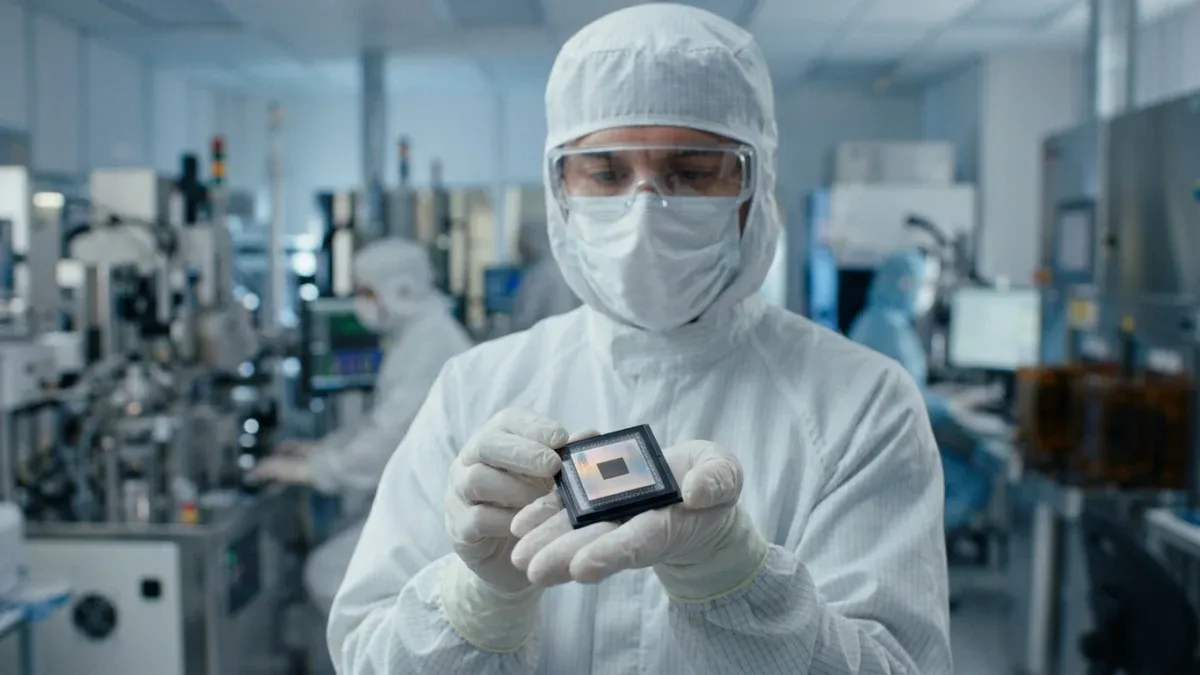
Google Quantum AI has shown that “magic state cultivation” works in practice on its Willow processor, reducing errors about 40 times compared with running without it. The work, published in Science, addresses one of the field's most persistent bottlenecks and is, in the company's words, “a crucial step towards scaling up quantum computing to practical use.”
The “magic state” bottleneck
Researchers have anticipated this problem since 2004, long before quantum computing was a practical engineering pursuit. To achieve “universal” quantum computing and run useful programs, a computer must be able to perform and error-correct a specific set of quantum operations. One way to do this is to first create “magic states,” so named because they help build the operations needed to go beyond classical computing.
The catch is that creating high-quality, error-corrected magic states is extremely resource-heavy. Some estimates suggest that up to 95% of a quantum computer's entire capacity might need to be dedicated to making them, leaving little room for actual computing. Magic states also cannot be reused after one is consumed, which makes them a scarce resource. For 20 years, researchers have worked to bring this cost down.
How the breakthrough was made
In 2024, Google Quantum AI researchers Craig Gidney, Noah Shutty, and Cody Jones refined an idea from the literature and developed “magic state cultivation.” The approach works like a filter. A noisy state is injected into a small region of a quantum chip, then a series of highly coordinated measurements checks for errors and removes flawed attempts. The process “cultivates” an exceptionally pure, low-error quantum state that can be adapted into a larger, useful encoding.
On paper, the idea promised a substantial reduction in the size of the quantum computer needed for practical tasks. In practice, it required a series of technical innovations. When research scientist Emma Rosenfeld first tested the protocol, she saw data that seemed to defy the laws of physics. After months of work, she traced the problem to an incorrect assumption in the team's standard measurement technique. Electrical equipment drift and temperature variation in the lab created a type of noise that undermined the benchmark's validity. The team added extra control to reduce that noise and invented a new benchmarking technique that uses cultivation itself as a tool to measure itself.
On Willow, the protocol achieved a 40-fold reduction in errors relative to un-cultivated states. The team also produced T-states with a record logical fidelity of 99.99%, which the company describes as a new state of the art in quantum metrology. The authors call it the first demonstration of a practical solution to one of quantum computing's most severe resource bottlenecks.
Findings and what comes next
The team also showed that the theoretical ideas fit the company's quantum architecture. They switched between “color codes,” a newer type of quantum error correction well suited to cultivation, and “surface codes,” a more established method. They grafted states from a distance-3 color code onto a distance-5 surface code. This showed that purified states can survive and transfer inside the hardware.
Google acknowledges that magic state cultivation must still be demonstrated at larger scale before it is practical, and that significant technical challenges remain.
Key Features at a Glance
- Error reduction: About 40x fewer errors than without cultivation on Willow. This is the headline result, showing the technique works on real hardware.
- Logical fidelity: A record 99.99% for T-states. This indicates how accurately the magic states are produced.
- Resource savings: Magic state creation can consume up to 95% of a quantum computer's capacity in some estimates. Cutting that cost leaves more room for actual computation.
- Color-to-surface code grafting: States moved from a distance-3 color code to a distance-5 surface code. This shows purified states can transfer within the hardware.
- Benchmarking method: Cultivation is used to measure itself, which addresses a flaw in the team's standard technique caused by lab noise.
Availability
The research is published in Science. The article does not mention a product release, pricing, or a timeline for larger-scale demonstrations.