A lone figure sits on a rooftop overlooking a foggy, sunlit urban landscape with tall buildings and scattered vehicles.
With its gravity-defying set pieces, memorable boss fights, and reimagined Manhattan, Control Resonant, released last week, is staking its claim as one of 2026's major PlayStation 5 releases. I spoke with Lead Level Designer Anne-Marie Grönroos, Art Director Elmeri Raitanen, and Lead Gameplay Designer Sergey Mohov about the inspiration behind the sequel's striking art direction and character and environment design.
Games featuring super-heroic protagonists aim to fulfill the ‘power fantasy,' but Control Resonant grounds its protagonist differently. “There is a deliberate groundedness in how Dylan moves and fights,” explains Elmeri. “We wanted to show that everything has a cost.”
Dylan's animations demonstrate that everything he does is difficult. It takes effort to use the Elevate ability, and shifting gravity is disorienting to him.
When Dylan stumbles or falls, players empathize and connect with him through familiar physical struggle. “That's a big part of one of the themes of the game,” says Sergey. “Somebody can be really powerful, but at the same time yearning for human connection and trying to learn how to interact with others.”
Dylan's actions shape the expansive world around him for deliberate effect. “In Control, dynamic destruction and reactive environments played a huge part of the second-to-second gameplay loop, making combat feel visceral and rewarding,” explains Elmeri. “In Resonant we wanted to retain that even on a larger stage, so when you slam the ground or create a shockwave, leaves kick up from the street, fire hydrants start spraying water, and trashcans spew litter.”
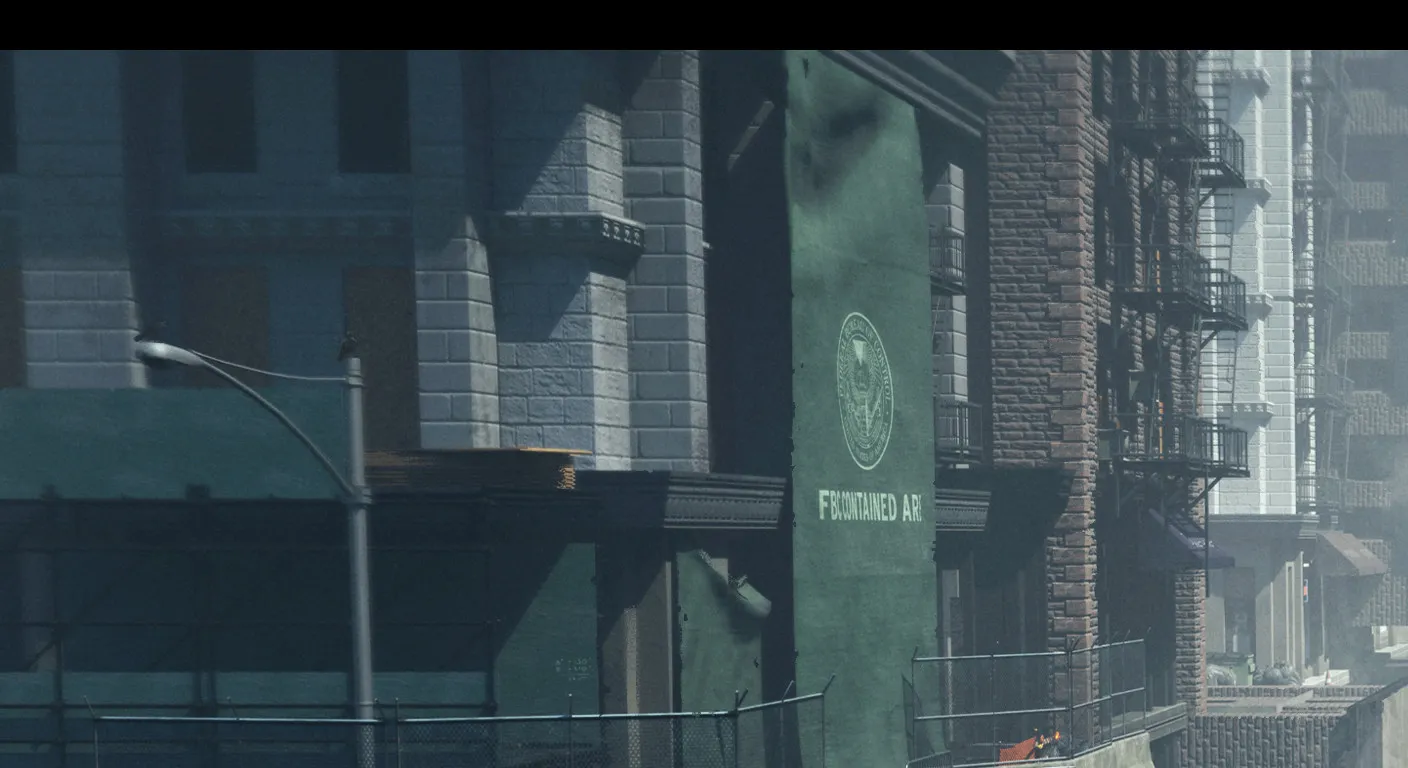
Remedy balanced Control's confined, Brutalist-inspired design with the openness of a brutalised Manhattan. “A new paranatural threat in the Patterning gave us the opportunity for unexpected and crazy visuals,” says Elmeri. “The Federal Bureau of Control (FBC), at face value, looks like a believable office space. Then when something otherworldly happens, it feels impactful because we had first established a baseline for the story.”
“The more mundane areas can also act as a palate cleanser,” says Anne-Marie. “They keep the more paranatural areas surprising. It's also why we placed the most normal zone, The Central, in the middle of the game world where it creates a baseline of normal New York. Familiarity with the real-world environments creates contrast and makes the paranatural stand out even more.”
Remedy created what it calls “Strange York”—not a one-to-one representation of real life but an iconic, movie-like retro version. “It was also a challenge to use a real world location,” explains Sergey. “For example, in the real New York the last phone booth was removed around 2022. But we have them in the Remedy universe New York.”
Environmental objects follow a particular design ethos. “Most concepts for objects around the environment started with an intended gameplay purpose and an idea of what that object is used for diegetically,” says Anne-Marie. “Or it could also be used to draw the player's attention, like the FBC satellite dishes around many of the Fast Travel doors, or the deflated FBC balloons near the map towers—in which case it can be up to the concept artist to come up with a reasonable in-world function and backstory.”
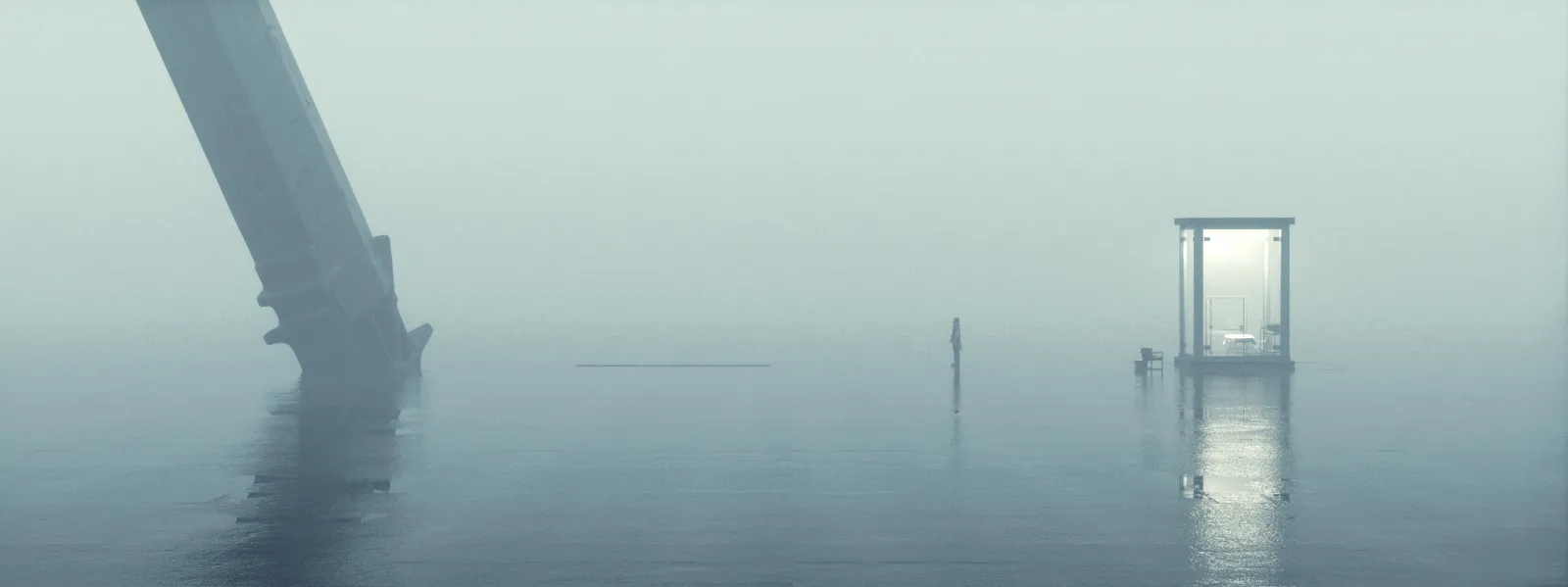
The Gap represents Dylan's psyche as a stark, grey, otherworldly space. “There was a lot of exploration about how to convey the Gap,” says Sergey. “We took inspiration from film and iconic locations, even something like The Truman Show where Truman reaches the end of the world and there's just a door in the sky. Dylan has spent all this time in a concrete building, locked up and experimented on, and that's what is most familiar to him. Which is why the Gap visually represents that.”
The Sinkhole mission features Dylan fighting enemies across floors, walls, and ceilings in a gravity-warped apartment building. “It started as a prototype to test how it would feel underneath the city through increasingly strange, twisted environments,” says Anne-Marie. “Deep sea exploration and cave diving were some of the inspirations, along with different underground themes, like subway tunnels.”
Setting the rule that everything that looks like a walkable surface should be a walkable surface fundamentally changed how areas were played. “It was quite disorienting to work on,” reveals Sergey. “But it allowed us to focus the player on what was in front of them and create some really cool combat encounters and traversal challenges.”
ff3d88b774dccf309c5bb5326a2338a348890d9e.mp41 / 8
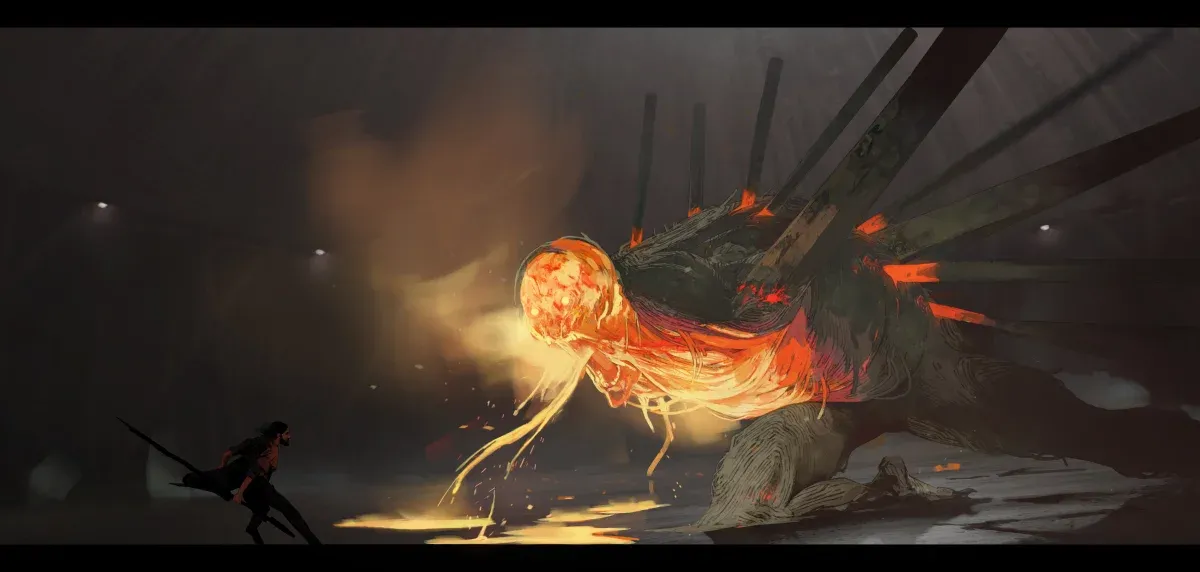
Boss fights serve as ‘skill checks' for players, but their creation involved the full development team. “We asked the full team to send their ideas for bosses to us,” reveals Sergey. “We then picked what would best fit the specific kind of player experience that we wanted from a specific boss, and developed it further. We then built the prototype for each, and assessed the size and shape of the space that this creature needed to be in. Then we would describe its behavior in a technical specification document. The iterated version would go to the concept artists who would work with the writers to figure out the visuals and space; how they fit the environment, the theme of the zone, and their identity.”
“Each Resonant boss was built on a theme, like controlling people inspired by mycelium or a hive mind,” says Elmeri. “We wanted to evoke awe in the player and create a sense of the majestic or divine. So we referenced a lot of medieval iconography and church architecture.”
“From the very beginning of development we wanted to evolve the game to be more player-driven in terms of exploration, progression, and narrative,” explains Sergey. “It definitely helps to have a powerful system because even though people loved the relatively confined spaces of Control, we wanted to open it up. We wanted bigger draw distances, more physics objects, and more enemies on screen. It's definitely Remedy's biggest game—I think one zone in Resonance is larger than any of the other zones in our previous games.”
PS5's capabilities also enabled extensive use of the DualSense Controller's features, including listening to radio calls via its built-in speaker and getting feedback from specific abilities on the Adaptive Triggers. “Getting that feeling of resistance and an extra click contributes a great deal to making the abilities feel more powerful,” explains Sergey. “And that's important in things like combat, so you don't have to look at Dylan's interface; you can just feel your way through instead.”
Control Resonant is available now on PS5.
| Edition | Price | Availability |
|---|---|---|
| Standard Edition | $59.99 | Steam, Epic Games Store, PlayStation Store, Xbox Store (Sep. 2026) |
| Digital Deluxe Edition | $69.99 | Steam, Epic Games Store, PlayStation Store, Xbox Store (Sep. 2026) |
| Standard Edition — physical | $59.99 | PlayStation 5, Xbox Series X|S; launches October 15 (Sep. 2026) |