NVIDIA lets animators generate motion inside Unreal Engine
NVIDIA's latest game development updates help teams bring new graphics, animation, and local AI capabilities into their engines while balancing image quality, performance, and creative intent. The headline items are NVIDIA Kimodo animation generation in Unreal Engine 5.9 Preview and developer lessons from the War Thunder NVIDIA DLSS 5 integration. Updates to the In-Game Inferencing SDK, RTX lighting tools, and Nsight developer tools round out the month.
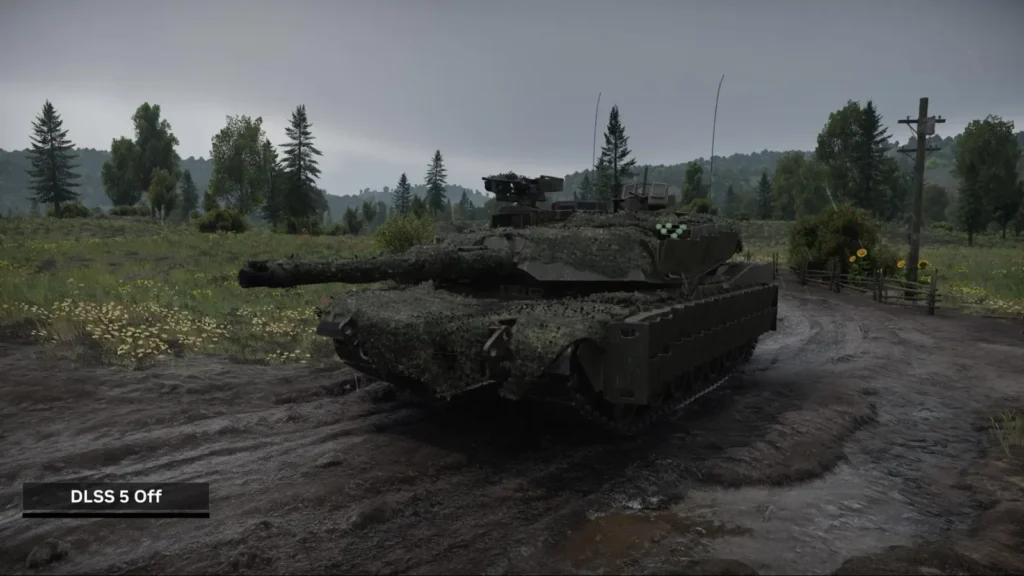
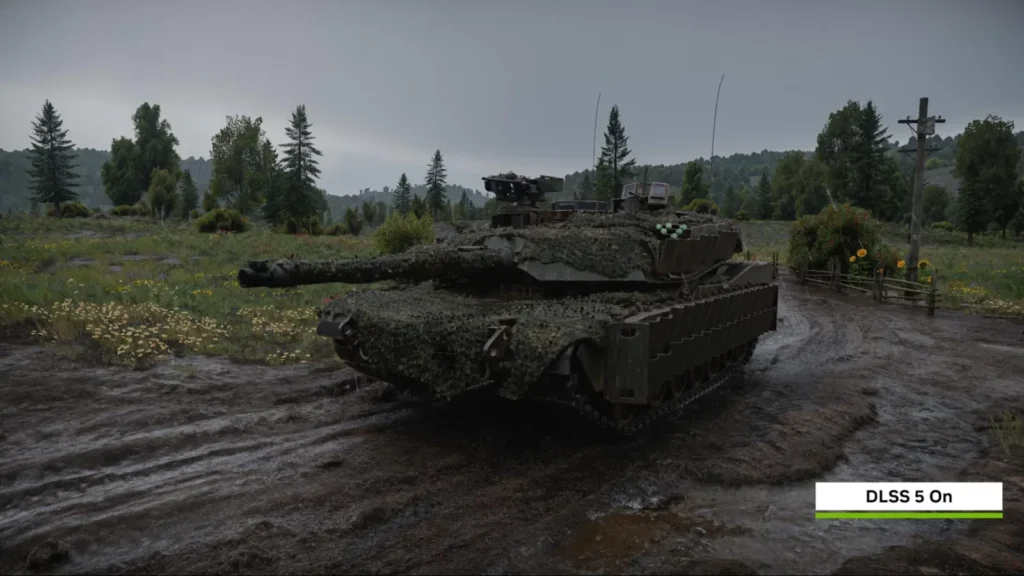
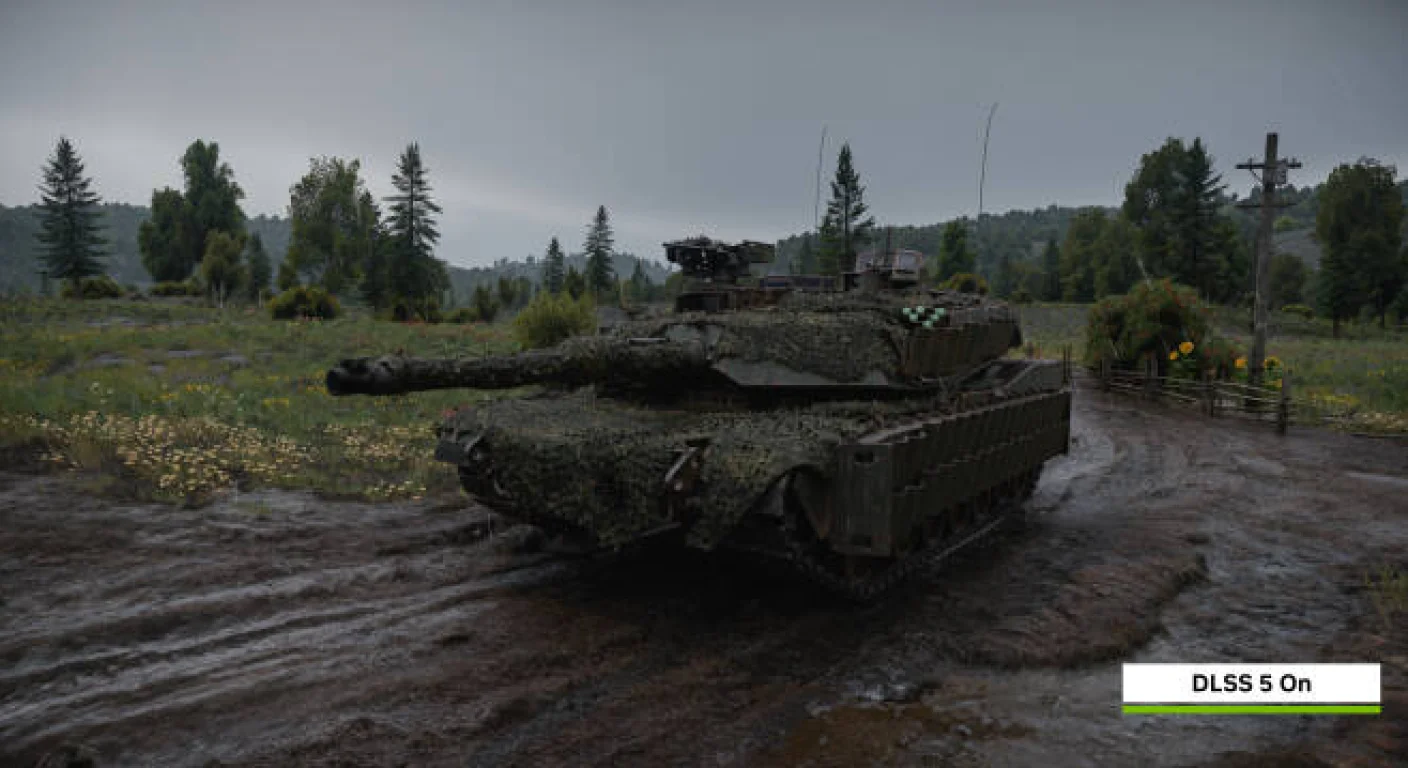
In an interview, Gaijin Entertainment explains how it integrated DLSS 5 with 3D-Guided Neural Rendering into War Thunder‘s Dagor Engine while preserving the game's established visual identity. The team adapted its color management pipeline to evaluate DLSS 5 in sRGB before post-processing and UI, then map the results back to linear HDR. In the team's words: “DLSS 5 delivers improved highlights and shadows while introducing a new level of microcontrast that we simply haven't been able to achieve before. The result is a more natural, lifelike image, with finer detail and a stronger sense of realism.”
The team also discusses tuning DLSS 5 against its reference look to preserve vehicle markings, surface wear, and material properties. It evaluated image quality and performance separately across air, ground, and naval combat. The interview includes ON/OFF comparisons highlighting rainy, overcast scenes.
Kimodo brings its animation research into Unreal Engine 5.9 Preview, which introduces a guided animation framework and a set of Sequencer tools that help animators work directly with AI motion-generation models. Kimodo is the first model integrated with it, so animators can generate character motion right inside Sequencer. The integration pairs GPU-accelerated motion generation with the familiar timeline editor workflow.
Animators can describe a motion with a text prompt, draw a spline path for the character to follow, and set target poses at specific frames. The model generates motion that follows these constraints, so teams decide where characters move and how they pose at key moments.
The NVIDIA In-Game Inferencing SDK helps developers integrate NVIDIA ACE on-device. ACE is a suite of AI technologies designed to help middleware and game developers build knowledgeable, actionable, and conversational in-game characters. The SDK supports multiple inference backends across GPU and CPU hardware, giving teams a common interface for running AI alongside game graphics.
Version 1.8 focuses on platform support and the inference components used in language and speech workflows:
RTX Dynamic Illumination 3.2 is available on GitHub for developers integrating ReSTIR lighting into their renderers. It adds new sampling options for ReSTIR DI, adds RTX Spark support, and expands the tools used to inspect lighting reservoirs. It also updates the Donut and NVRHI components and includes bug fixes.
NVIDIA Real-Time BVH Viewer 1.0 shows ray tracing acceleration structures while a game or renderer is running. It helps developers understand TLAS and BLAS contents, validate acceleration structure updates, and debug geometry-related ray tracing issues. The viewer integrates at the graphics API level through Direct3D 12 and Vulkan libraries. Developers send acceleration structure builds, copies, queue submissions, and frame boundaries to the viewer, which displays the results in a separate window with its own camera. That lets it inspect the TLAS independently from the in-game camera. To inspect an existing title without changing its code, developers can use the included sampler, which attaches the viewer to a running D3D12 or Vulkan process.
NVIDIA RTX Path Tracing 1.9 gives developers a more accessible starting point for adding ray-traced lighting. Its intro sample uses a hybrid deferred renderer to introduce lighting features one at a time across nine selectable steps, from image-based lighting and screen-space effects to ReSTIR DI, path-traced indirect lighting, and SHaRC radiance caching. SHaRC is also integrated into the main real-time path tracer and enabled by default, providing additional indirect-lighting information to DLSS Ray Reconstruction.
NVIDIA RTX Global Illumination 2.9 adds a new IndirectDiffuse sample, a deferred renderer that uses NRC or SHaRC for indirect diffuse illumination, with shadow mapping, sky lighting, and visualization modes. It also adds Shader Execution Reordering (SER) support for Direct3D 12 (Shader Model 6.9) and Vulkan, toggleable directly from the UI.
NVIDIA Nsight Graphics 2026.4 and Nsight Systems 2026.6 introduce support for analyzing applications using DLSS Frame Generation (DLSS-FG). When integrating DLSS Frame Generation and Multi-Frame Generation into a title, it is important to understand both the work submitted by the application and the pacing of the frames presented to players. In Nsight Graphics, GPU Trace now displays application and presented frames on separate timeline rows, while Graphics Capture preserves the DLSS-FG workload for inspection during capture and replay. Nsight Systems distinguishes generated frames from application frames and correlates them with CPU frame ranges. DLSS-FG support in both tools requires Streamline SDK 2.12 or newer.
The releases also introduce agentic AI tooling. A new Nsight Graphics MCP server enables compatible AI agents to capture applications, inspect and debug captures, and analyze GPU traces. Nsight Systems includes skill files that guide AI agents in diagnosing CPU bottlenecks, frame stutter, and CPU-GPU synchronization overhead.