Google has announced Gemini 4 Carbon, its strongest model yet, with state-of-the-art cybersecurity and long-horizon capabilities. Carbon ranks #1 on the recently updated v5.0 of the Artificial Analysis Intelligence Index, where it scores 59. It follows Gemini 4 Argon, which launched two weeks earlier, and Google says the pace shows how quickly it is pushing the frontier forward while strengthening safeguards alongside capability gains.
Carbon shows significant gains across coding and agentic tasks, as well as in the capabilities that matter for cyber defense. It takes a firm lead on three...
NVIDIA has released Nemotron 3.5 Transcribe, an open-weight, promptable speech model that turns recorded audio into text and can also attribute speakers, translate, and answer questions about the recording. Most transcription tools produce a word-for-word record and stop there. A transcript can capture every spoken word and still leave people wondering who said what, how to translate it, or how to spell domain jargon. Multilingual calls, fast-paced meetings, and medical dictation each need different output. Transcribe puts these tasks in one checkpoint and lets developers choose the output...
Authors: Granite Team, IBM
Overview
Granite 4.2 is IBM's first family of dense, decoder-only reasoning LLMs, released in three sizes: 3B, 8B, and 30B. These models are post-trained from Granite-4.1 base models. The Granite-4.1 base models were pre-trained from scratch on roughly 15T tokens with a five-phase strategy that extends the context window to 512K tokens. They were then supervised fine-tuned on chain-of-thought, reasoning, and agentic-trajectory data, and post-trained with a multi-stage reinforcement learning pipeline. That pipeline includes agentic RL, where the 8B and 30B models...
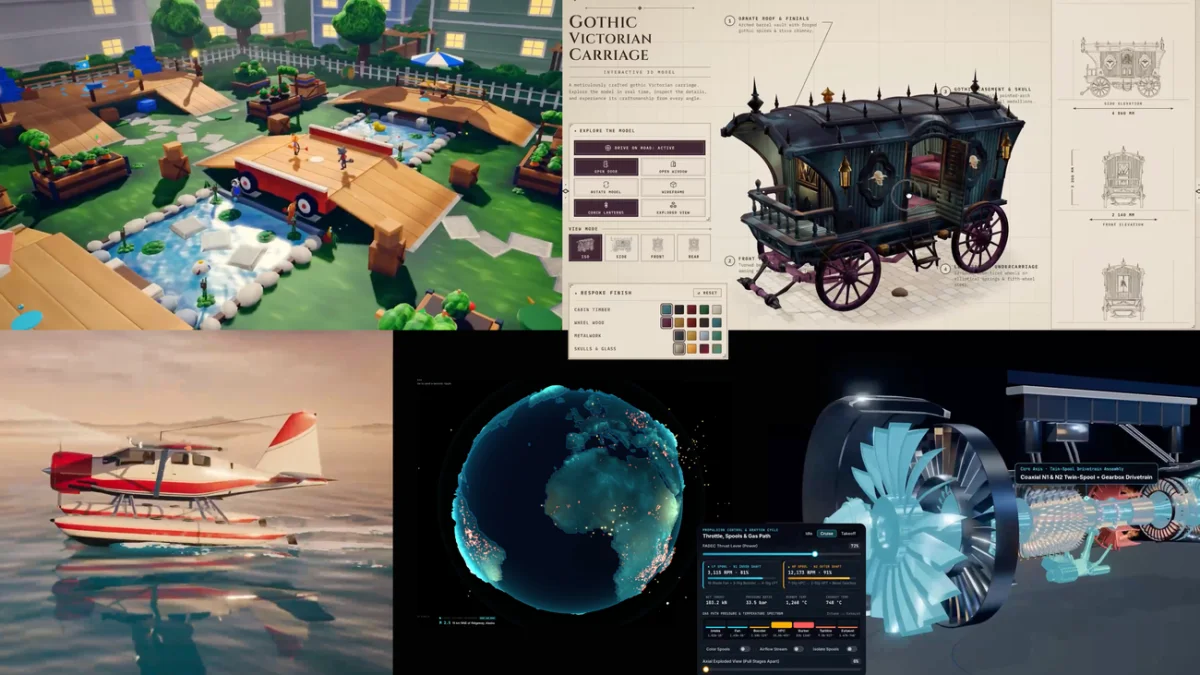
Google's new frontier model, Gemini 4 Argon, is designed for deep work on complex tasks in coding, finance, legal, cybersecurity, and science. Google says its depth and precision across multi-step tasks let Argon outperform other frontier models on benchmarks across those domains. Since the broad rollout, community builders have used it to create interactive tools and 3D worlds. Google highlighted five of these builds, including a globe that maps tectonic shockwaves in real time and a 3D multiplayer game.
Five builds, five different strengths
Argon's upgrades in spatial reasoning,...
Microsoft and Hugging Face's ThinkingBox-Training, now on GitHub, uses the same executable database checks that grade agents as training rewards. In one run, Qwen3.8-27B's average success rose from 51.70% to 60.78% after 50 GRPO steps, and tasks it completed correctly on all twenty attempts rose from 38 to 107.
This is a follow-up to the team's first post on ThinkingBox, a benchmark that tests whether an agent's work actually changed the database it was supposed to change. In that earlier post, a model closed a customer's ticket as resolved while the carrier exception behind it was still...
Corsair has announced the SABRE v3 PRO PureVector Wireless Gaming Mouse series, six models built around PureVector, a Corsair-exclusive technology codeveloped with aim training platform Aimlabs. Corsair says PureVector is designed to significantly increase aiming speed and overall accuracy through personalized directional sensitivity. The pitch starts with a premise about DPI: one static value is an inherently flawed way to play, because every player's aim is unique and has directional biases from natural biomechanical variations or musculoskeletal differences. Swiping left uses different...
Google is updating AI Search so people can dive deeper into the web from their answers. The push comes as users turn to tools that give them more choice: the number of people who use Google's Preferred Sources feature has grown by more than 7x since the start of the year. The changes cover inline links, official web pages, news carousels, related-article links, and creator profiles.
Inline links are links embedded in words or phrases in an AI response, so they let you explore a topic at the moment you're reading about it. Google says it has made continued and substantial increases to their...
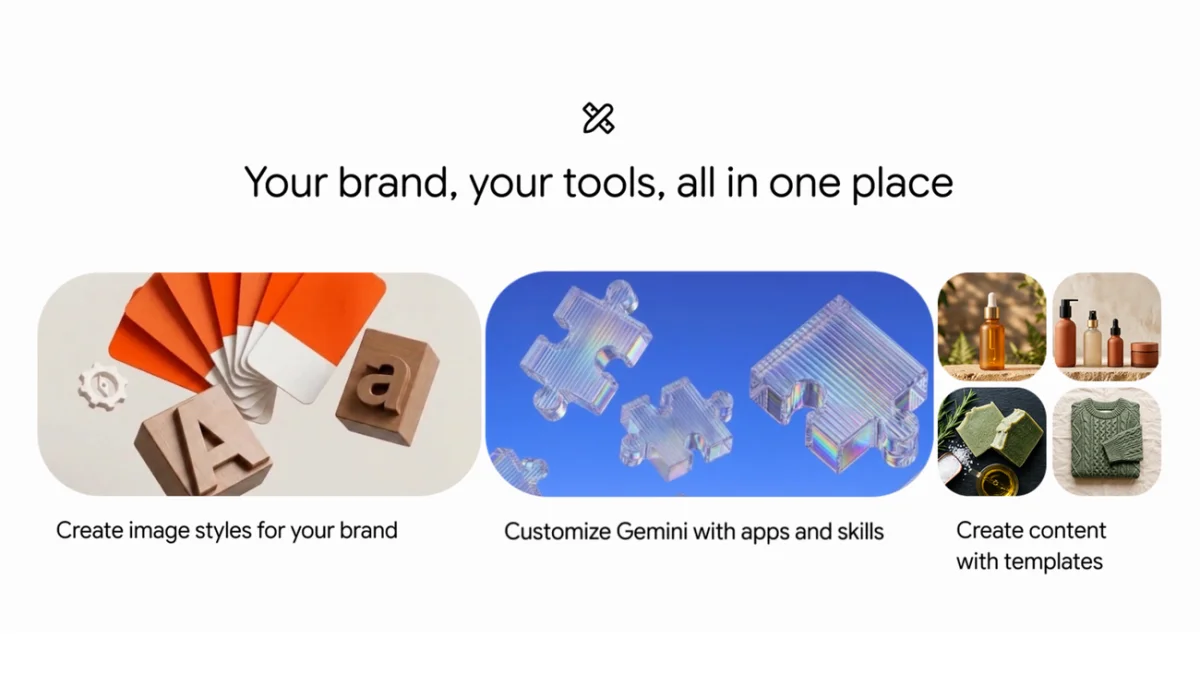
Tens of millions of small business owners already use Gemini to brainstorm products, manage customer feedback, and analyze business performance. Google is adding tools meant to give these entrepreneurs their time back so they can focus on their passion.
A central hub for small business owners
Google is introducing a business landing page where owners can streamline daily tasks. From this hub, they can build their brand, analyze finances, understand customer insights, and more. Gemini also connects to Google tools, including Google Business Profile, Google Ads, and Google Workspace, as well...
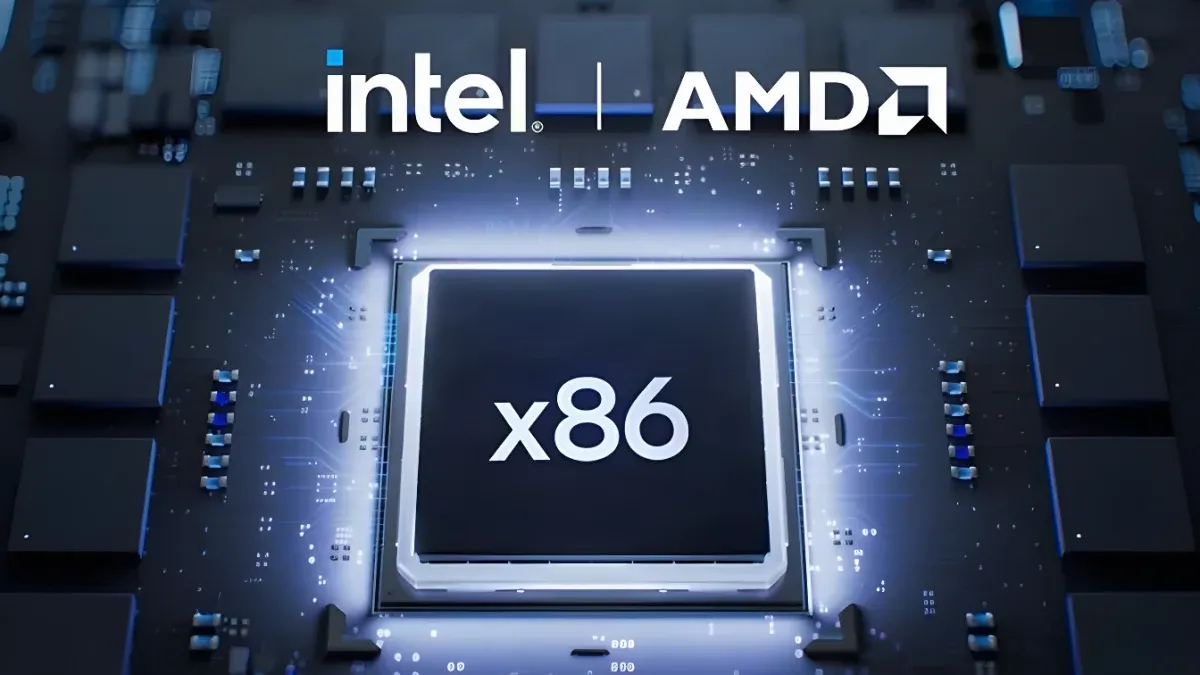
AMD and Intel are combining their x86 CPU optimization work for PyTorch in oneDNN, an open-source deep learning library governed by the Unified Acceleration Foundation (UXL). The collaboration gives developers a common software path for optimized AI workloads across AMD and Intel CPUs, which the companies say reduces fragmentation in the x86 AI ecosystem.
Following a recommendation from the x86 Ecosystem Advisory Group, the two companies have aligned on oneDNN as the default open-source library for x86 acceleration within PyTorch. AMD is integrating its ZenDNN optimizations into oneDNN and...