hugging face

Skip to main content

Tag: hugging face

Multimodal Open d1 Decision Models for the Edge

Multimodal Open d1 Decision Models for the Edge

Liquid AI has released two open-weight decision models: d1-3B and d1-omni-600M (experimental). Unlike generative models that produce tokens sequentially, decision models answer questions in a single forward pass, making them suitable for edge deployment. d1-3B is trained from LFM2.5-VL-3B, a decoder-only vision language model that accepts text and images. d1-omni-600M is trained from LFM2.5-Encoder-350M, a bidirectional encoder that adds vision and audio encoders, accepting either text and images or text and audio as inputs. The d1-omni-600M model is currently in early research release and...

Continue reading

ML-Intern: Six AI Models Built From a Single Prompt

ML-Intern: Six AI Models Built From a Single Prompt

Last week, I wanted a small version of the prompt rewriter that ships with Qwen-Image 2.1. The official one is a 9B model that needs about 20 GB of memory and thinks for thousands of tokens before writing a single paragraph. The Hub had only compressed copies of that same 9B model. So I described what I wanted to ML-Intern, and the next day I had a 0.8B version that runs on a CPU. It returns valid output 99.7% of the time and uses about a quarter of the teacher's tokens. The compute for the whole project, including having the 9B model label 8,797 example requests, came to USD 16. Over the...

Continue reading

A falcon draped in the UAE flag stands against a purple Dubai skyline, with text announcing Falcon-H1-Emirati, a new Emirati Arabic language model.

Falcon-Emirati-7B: A Dialect-Specialized Model for Emirati Arabic

Arabic is really a family of languages living under one name. Modern Standard Arabic is what you read in the news or a textbook, but it's rarely how people actually talk to each other. In the UAE, day-to-day conversation, humor, negotiation, and storytelling happen in Emirati Arabic, a Gulf dialect with its own vocabulary, its own rhythm, and a culture wrapped tightly around it. Emirati poetry, especially nabati poetry, along with proverbs and short anecdotes, carries meaning that doesn't survive a literal, word-for-word reading. A model that only knows MSA can translate every word of an...

Continue reading

The AstaBrief logo in teal on a dark background, surrounded by floating document icons.

Allen AI Releases AstaBrief 8B, an Open-Weights Model for Scientific Report Generation

Language models can help researchers search literature, synthesize evidence, and work through complex questions. But scientific work places particular demands: answers must stay grounded in evidence, models must preserve what evidence actually supports rather than broadening conclusions, and researchers need to verify outputs. Allen AI observed this in how scientists use Asta, its agentic platform for scientific work. Instead of simple keyword searches, users bring substantial context and constraints—for example, asking Asta to compare approaches across literature while accounting for...

Continue reading

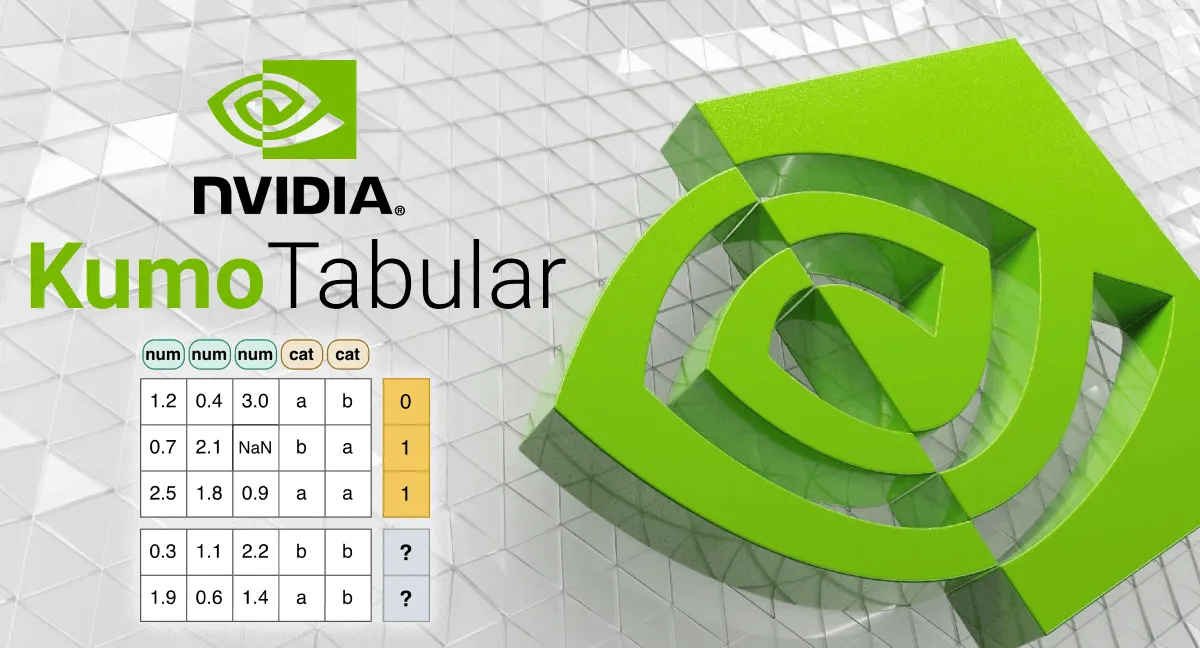
NVIDIA logo and Kumo Tabular text beside a 3D green eye symbol and sample tabular data with numerical and categorical columns.

NVIDIA Releases Kumo Tabular, an Open Foundation Model for Tabular Data

NVIDIA has released Kumo Tabular, an open foundation model for tabular classification and regression available on Hugging Face. The model predicts labels for new rows in a single forward pass without training, tuning, or feature engineering. It comes in three sizes ranging from 28M to 215M parameters, runs through NVIDIA's open-source library, and is released under the OpenMDW-1.1 license for commercial use. Model Size Parameters Small 28M Medium ~122M Large 215M Kumo Tabular ranks first on four major benchmarks: TabArena, BeyondArena, TALENT, and ScoringBench. The Problem...

Continue reading

A black square with a white bird outline, an orange X, and a yellow clapping hands emoji on a gradient background.

Jun Kim Joins Hugging Face to Lead MLX Framework

MLX is Apple's framework for local AI, optimized for Apple Silicon. Hugging Face has supported MLX since its launch as a Christmas present from Awni Hannun and Angelos Katharopoulos in 2023, and the Hub now serves as the primary repository where people find and contribute MLX models. The project is graduating from a side effort to a fully maintained and funded initiative The project is graduating from a side effort to a fully maintained and funded initiative, which will provide stability and faster development. Jun will lead the effort full-time, better guiding contributors and planning for...

Continue reading

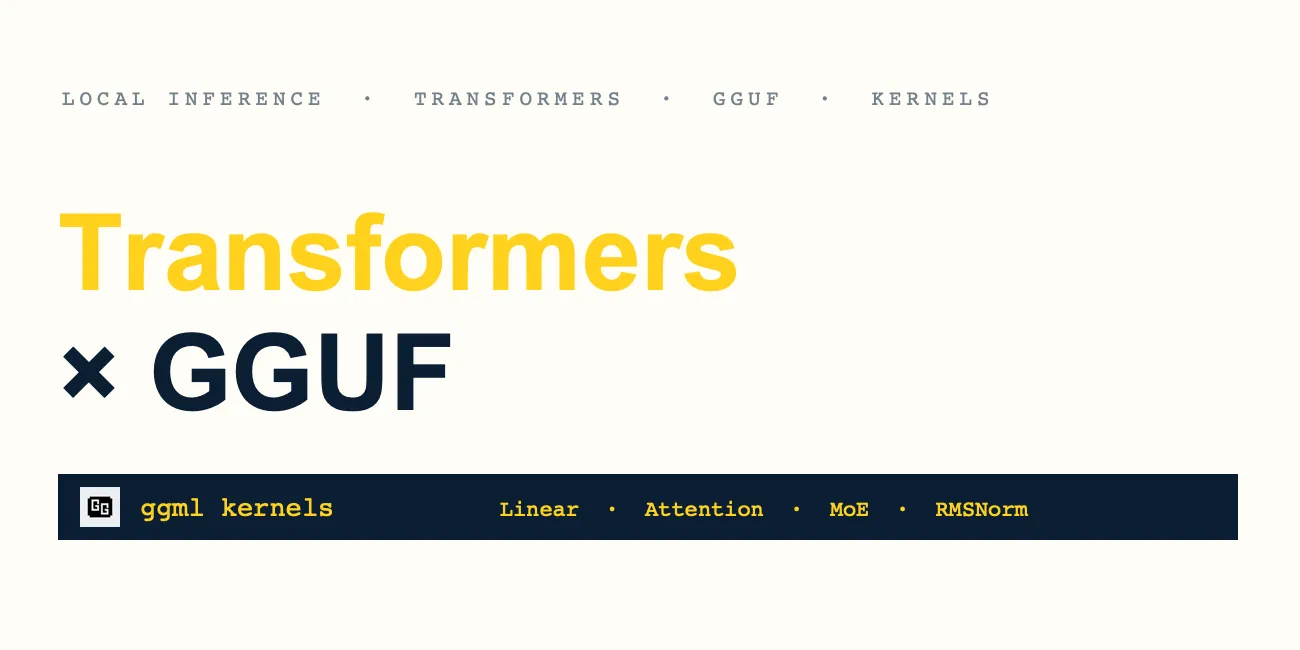
Bold yellow and black text reads "Transformers × GGUF" with navigation labels above and a dark bar below listing "ggml kernels" and model components.

Hugging Face Adds GGUF Model Support to Transformers

Hugging Face is adding support for running GGUF models efficiently in transformers, allowing users to load checkpoints sized for their laptop's memory through the familiar transformers APIs. Pick a GGUF from the Hub, load it with from_pretrained, and start generating on your own machine. Running AI models on your laptop has become much easier, and llama.cpp has been a big part of that. Its inference engine powers local AI tools such as Ollama, LM Studio, and Jan. Alongside projects like MLX, it has helped make local inference a practical option for everyday use. GGUF, developed by the...

Continue reading

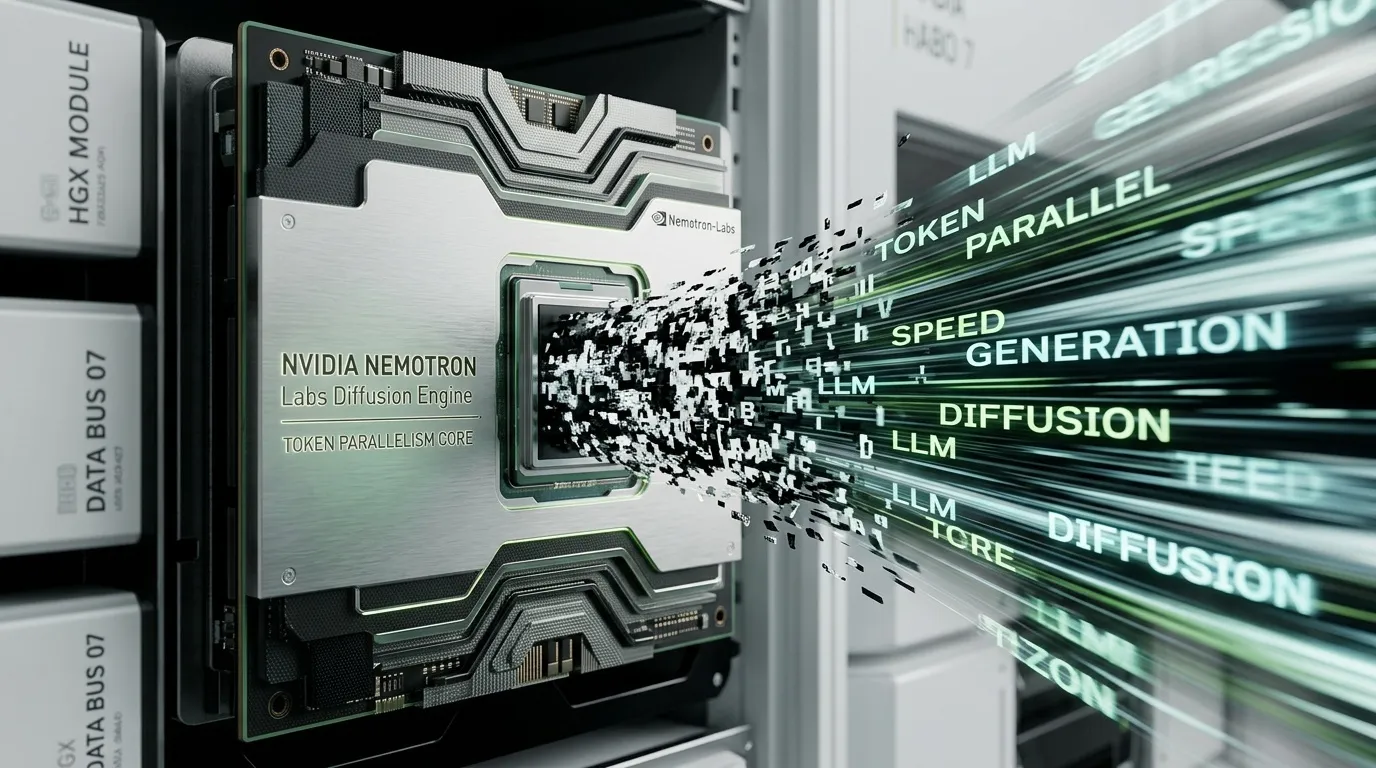
NVIDIA Nemotron-Labs Diffusion: Parallel Token Generation for Faster LLM Inference

NVIDIA Nemotron-Labs Diffusion: Parallel Token Generation for Faster LLM Inference

Large language models have become the default interface for code generation, math problem solving, summarization, document understanding, and many other developer workflows. Under the hood, though, most LLMs still generate text one token at a time, with each token depending on all previous tokens. These autoregressive (AR) models consume their own outputs as they generate. The autoregressive approach has been remarkably successful—it's stable to train, simple to serve, and responsible for much of the progress in modern language modeling. But it has a fundamental limitation: every new token...

Continue reading