16GB RTX 5060 Ti: Nearly 40% Faster at 1440p
No single GeForce RTX 50 card fits every build. The right pick depends on your resolution, memory needs, case size, and budget, and the article's six picks cover those cases.
Each pick below is paired with independent reviews where they exist.
The RTX 5070 Ti handles the widest range of work in the lineup. It runs 1440p with ray tracing on without forcing you to lower settings, and it holds 4K in standard titles using DLSS 4.5 Super Resolution at Quality. Its 16GB of memory is also enough for path tracing.
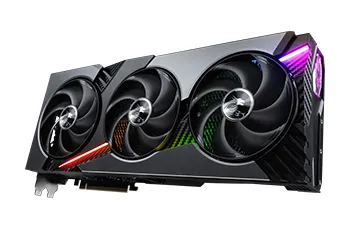
The RTX 5080 is built for 4K with ray tracing left on. It has 10,752 CUDA cores, 16GB of GDDR7 running at 30 Gbps, and a 360 W power allowance, so it holds its speed instead of easing back. DLSS 4.5 and 6X Dynamic Multi Frame Generation keep ray-traced 4K smooth. Because 4K load is sustained, the cooling design matters more here than at any other tier.
| Specification | GeForce RTX 5080 |
|---|---|
| CUDA cores | 10,752 |
| Memory | 16GB GDDR7 |
| Memory speed | 30 Gbps |
| Power allowance | 360 W |
The RTX 5060 Ti covers 1080p at high settings and handles 1440p comfortably. It comes in two capacities, and the choice depends on your games:
If your library spans both, the 16GB version has more room to grow.
At 4K with full path tracing, the RTX 5090 is the only card in the lineup that isn't the limiting factor. Its 32GB of memory also matters for creative work and for running AI models locally, where a model either fits in VRAM or it doesn't.
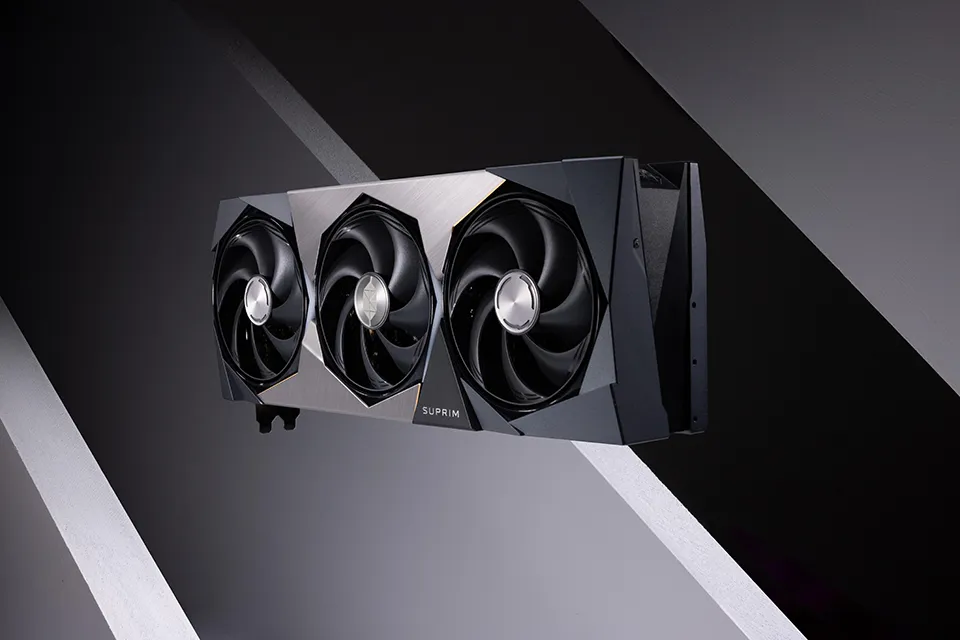
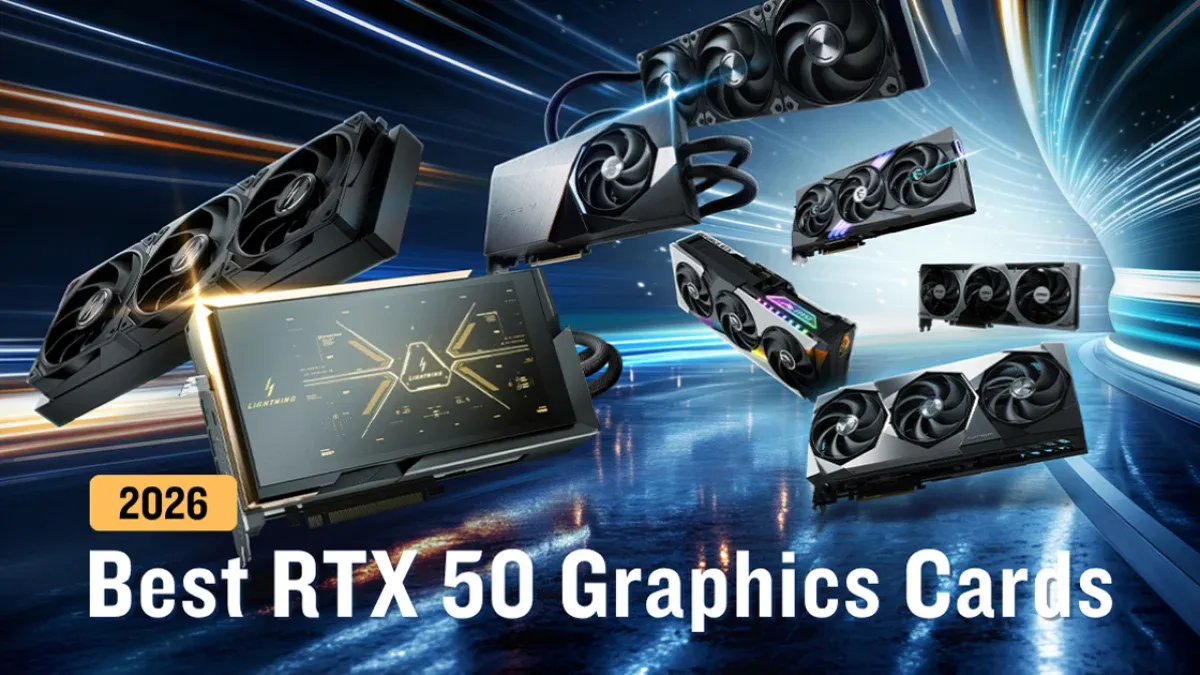
SUPRIM is the highest tier that ships in volume. Only the RTX 5090 LIGHTNING Z sits above it, as a 1,300-unit limited edition. SUPRIM reaches 2745 MHz on the RTX 5080 and 2565 MHz in Gaming Mode on the RTX 5090. SUPRIM LIQUID moves heat to a 360 mm radiator outside the case, and TechPowerUp rated its cooling the strongest it tested. Since more heatsink lets fans run slower, the cooler also makes the card quieter.
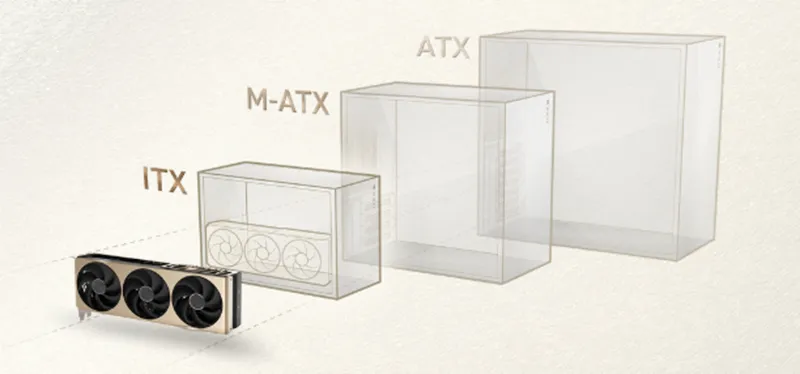
In small builds, three measurements become hard limits: the maximum card length the case publishes, the height from the PCIe slot to the side panel, and how many expansion slots the cooler takes up. VENTUS 2X is the shortest option, at 197 mm long on the RTX 5060. INSPIRE 3X is the narrowest, at 112 mm tall against 120–126 mm for two-fan cards, and it fits up to the RTX 5080. Measure length and side-panel height before you buy.
The LIGHTNING Z uses custom AIO liquid cooling with a 360mm triple-fan radiator and an 8-inch display panel. It runs two 12V-2×6 connectors, an 800W power limit on the default OC vBIOS, and 1000W on the Extreme vBIOS. It is a collector's piece, not a practical buy for most people.
For most builds, the RTX 5070 Ti is the safest pick, and the 16GB RTX 5060 Ti is the best value for 1440p and memory-heavy games. Choose by resolution, memory needs, and the measurements of your case.