Chrome, Safari, and Firefox logos hover above a circuit board with an OPFS folder icon in the foreground.
Security researchers at Graz University of Technology have detailed a new browser-based side-channel attack that can reveal which websites and applications a user has open by measuring SSD access latency through JavaScript. The technique, named FROST (Fingerprinting Remotely using OPFS-based SSD Timing), achieved about 89% accuracy for identifying visited websites and roughly 96% accuracy for recognizing running applications on an M2 Mac Mini test system. The attack requires only that a victim load a malicious web page and reportedly functions across different browsers.
How FROST operates
FROST leverages the Origin Private File System (OPFS), a browser API that permits sites to create and store files on a user’s local disk without explicit permission prompts. The attack proceeds by allocating a large OPFS file that exceeds system RAM so that reads bypass the OS page cache and hit the SSD directly. While the attacker repeatedly issues random 4 KB reads, concurrent disk activity generated by other sites or applications produces latency spikes. Those timing patterns are fed into a convolutional neural network trained to match I/O signatures to specific sites and apps.
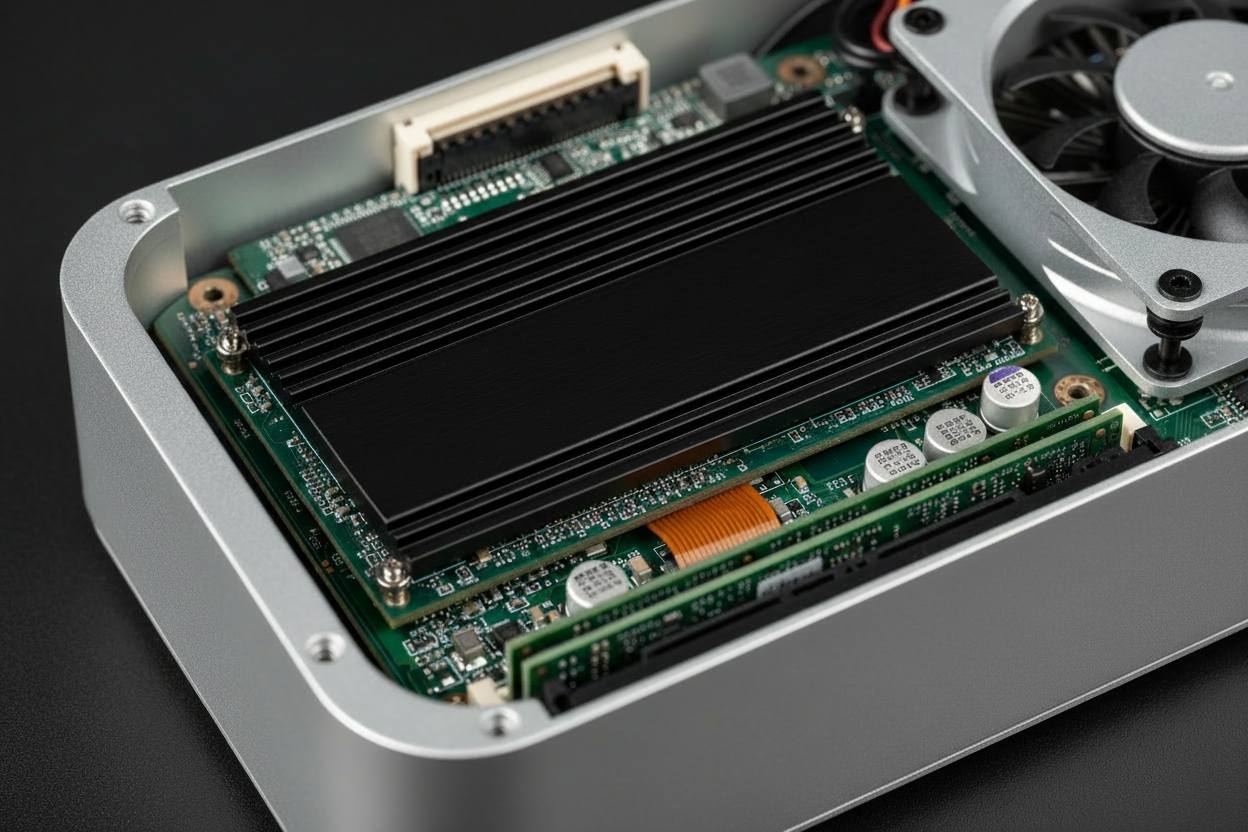
Source: Generated by ABN – Copyright free
Cross-browser and platform testing
Because the contention exploited by FROST occurs at the physical storage level, the researchers report the attack works across browsers. Tests running the attacker page in Chrome while the victim browsed in Safari showed only a 3.38% throughput difference compared with a same-browser scenario. The full fingerprinting classification was only executed on an Apple M2 Mac Mini with 8 GB of RAM and a 256 GB SSD. On Linux the team confirmed the ability to measure SSD latency from the browser but did not complete end-to-end classification, and Windows was not evaluated. The OPFS file must reside on the same physical SSD as the monitored activity, limiting the attack on multi-drive systems.
Disclosure and possible mitigations
The research team disclosed the findings to Google, Apple, and Mozilla. Google responded that it does not treat fingerprinting as a security vulnerability, Apple described the attack as “currently out of scope,” and Mozilla acknowledged the research without issuing fixes. A significant practical barrier is the large OPFS file required; allocating tens or hundreds of gigabytes is likely to be noticed by most users. Proposed mitigations include capping OPFS file sizes to system RAM limits or requiring explicit permission to create large OPFS files. Given Google’s stance on fingerprinting, browser-level remediation appears unlikely in the near term.